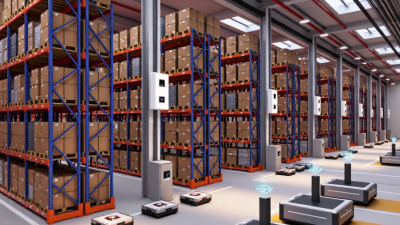
When you look at top China Uwb Tracking solutions for buyers around the world, it really starts with one practical question: can the system actually locate assets reliably inside a real facility—not just in a nice demo? UWB tracking uses ultra-wideband radio and precise time-of-flight signals to measure distance. In practice, it can guide forklifts, keep tabs on tools, protect inventory, and help keep workers safer. The real value shows up on the factory floor, not in a glossy brochure.
Dr. Moe Z. Win, a well-known UWB researcher at MIT, once said, “UWB technology is a promising platform for future wireless communications.” That says a lot about where the tech could go. But buyers still need to look closely at each supplier. A complete solution might include anchors, tags, gateways, cloud software, mobile dashboards, and application programming interfaces. And honestly, installation details matter a lot. Concrete walls, metal racks, battery life, and anchor calibration can all change location accuracy.
Chinese suppliers now offer flexible systems for warehouses, hospitals, manufacturing plants, and logistics centers. Some provide sub-meter positioning in controlled environments. Others focus on lower costs or faster deployment. Neither option is automatically better—it depends on your needs. If you're a global buyer, compare test data, firmware updates, integration support, and production capacity. And definitely ask for a live demonstration.
Real deployments are rarely perfect. Tags may lose signals near machinery. Software interfaces may need some refinement. We should admit that. Reliable UWB tracking depends on field testing, transparent specifications, responsible data handling, and dependable after-sales service. This guide introduces leading China UWB tracking solutions and explains how international buyers can evaluate performance beyond attractive pricing.
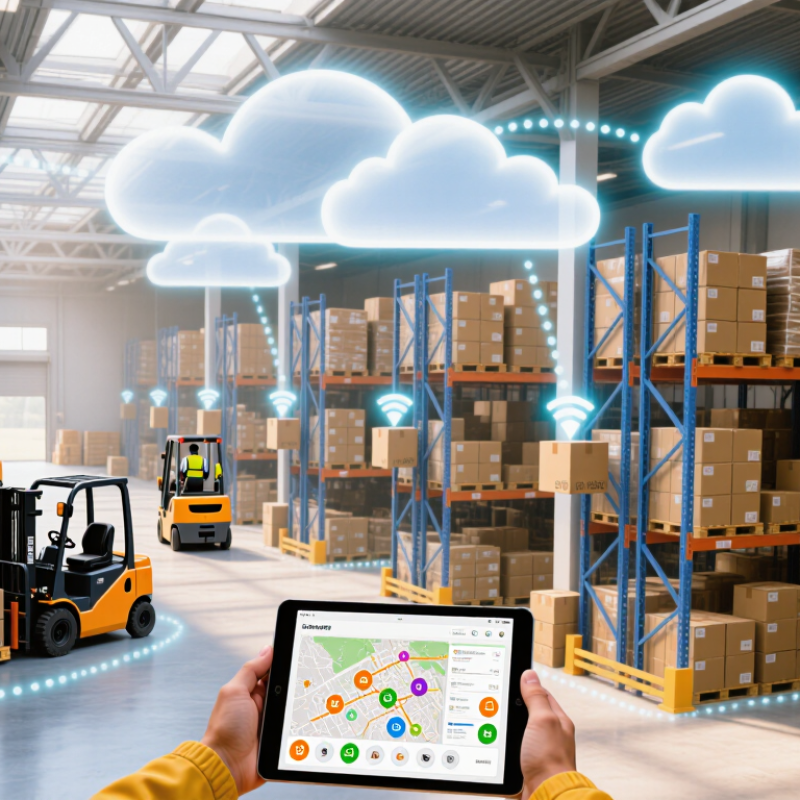
Ultra-wideband (UWB) tracking locates tagged objects or people through short radio pulses. It measures how long signals take to travel between tags and fixed anchors. The system then calculates position using time-of-flight or time-difference methods. In a warehouse, anchors may sit on walls, ceilings, or machinery. Tags can be attached to carts, tools, or safety equipment.
Accuracy depends on anchor placement, signal calibration, and the surrounding structure. Metal shelves and concrete walls can reflect signals and create errors. Field testing should include loading bays, narrow aisles, and moving equipment. Small mistakes matter. UWB can achieve highly precise positioning, but “centimeter-level” results are not automatic. That claim needs verification under real operating conditions.
Its core advantages include low latency, strong spatial resolution, and continuous location updates. Compared with basic proximity systems, UWB can distinguish assets only a short distance apart. This supports inventory visibility, workflow analysis, and collision-warning applications. It can also reduce manual searches when equipment moves frequently. However, performance may decline when anchors are poorly aligned or power management is ignored. Reliable projects require documented testing, secure data handling, and regular maintenance. The technology is powerful, but not magic.
China’s UWB tracking solutions are built around five practical layers. The Uwb Tracking Tag is the mobile core. It combines a UWB radio, antenna, processor, motion sensor, and battery. Some tags also include Bluetooth for configuration and low-power communication.
Fixed anchors calculate distance through time-of-flight signals. Their placement affects accuracy more than many buyers expect. Gateways collect positioning data and forward it through Ethernet, Wi-Fi, or cellular networks. Edge software then converts raw measurements into locations, zones, alarms, and movement histories. Interfaces using MQTT or REST can connect with warehouse and hospital systems.
A 2024 Grand View Research assessment estimated the global UWB market at about USD 1.66 billion in 2023. It also projected strong growth through 2030. That growth increases demand for reliable components, not simply cheaper tags. In real deployments, metal shelving, concrete walls, and crowded radio environments create errors. Calibration is essential.
Chinese suppliers often provide anchors, tags, gateways, batteries, and positioning software as one package. Buyers should request accuracy tests under real operating conditions. Ask for battery-life records, firmware update procedures, and replacement lead times. A useful target may be 10 to 30 centimeters, but performance varies by site. The overlooked weakness is maintenance. Even a precise system becomes unreliable when anchors move, batteries weaken, or software data is poorly checked.
Uwb Asset Tracking solutions differ by industry, because location accuracy must match daily work. In manufacturing, fixed anchors and wearable tags locate tools, parts, and workers within production zones. A technician can find a torque tool near a crowded assembly cell, rather than search through cabinets. For logistics, UWB tags support pallet movement, dock visibility, and forklift coordination. MarketsandMarkets estimated the real-time location systems market at about USD 5.1 billion in 2023, with strong growth expected through 2028. These figures show demand, but implementation quality still matters more than market size.
Healthcare environments often use badge tags, equipment tags, and room-level dashboards. A nurse can identify an available infusion pump before walking across several corridors. In construction, rugged tags and temporary anchors track high-value equipment across changing floors. Retail applications may combine shelf-level sensing with staff-location data, although privacy controls require careful design. Grand View Research has projected strong growth for ultra-wideband technology through the decade, driven by industrial positioning and connected devices. The forecast is useful, not absolute.
Practical projects need calibrated anchors, tested battery routines, and clear access rules. Metal racks can distort signals. Wet concrete can complicate readings. A clean digital map may still be wrong by a few meters. Teams should validate accuracy during busy shifts, not only in an empty facility. That small step prevents expensive assumptions.
China Top UWB Tracking Solutions for Global Buyers
When evaluating a Uwb Tracking System, measure accuracy in real working conditions. Open warehouses may show 10–30 centimeter precision, but metal racks, concrete walls, and moving people can increase errors. Mark fixed reference points on the floor, then compare reported positions with a calibrated tape measurement. Repeat each test at different distances and times.
Range should be tested in both clear and obstructed areas. A system may perform well across 100 meters outdoors but lose stability inside a crowded facility. Check update speed, signal interruptions, and performance near machinery. Reliability is not only about average accuracy. It also includes recovery after interference, stable data delivery, and consistent operation during long shifts. No test is perfect. Unexpected failures deserve careful review.
Tips: Test line-of-sight and non-line-of-sight conditions. Measure both. Record failures, not only successful readings. Ask suppliers for test methods, environmental limits, calibration procedures, and independent verification. A short demonstration can look impressive, yet a seven-day trial often reveals battery decline, missed locations, or delayed alerts. Test again before making a purchasing decision.
A practical, brand-neutral comparison framework for evaluating UWB tracking solutions. Performance figures are indicative ranges commonly achieved in well-designed indoor deployments and must be verified through site testing.
| Solution Type | Typical Positioning Accuracy | Typical Indoor Range | Update Rate | Reliability Factors | Best-Fit Applications | Key Buyer Evaluation Method | Overall Suitability |
|---|---|---|---|---|---|---|---|
| Two-Way Ranging Asset Tracking | Typically 10–30 cm under clear line-of-sight conditions | Approximately 30–100 m indoors, depending on construction and antenna placement | About 1–20 updates per second | Requires adequate anchor coverage, synchronized infrastructure, and stable tag attachment | Tools, returnable transport items, work-in-progress inventory, and equipment tracking | Measure median error, 95th-percentile error, battery life, and packet success rate across multiple zones | ★★★★★ |
| Angle-of-Arrival Real-Time Location System | Typically 10–30 cm in optimized areas; accuracy can decrease near metal structures | Approximately 30–80 m indoors | About 1–50 updates per second, depending on tag density and network configuration | Performance depends strongly on anchor geometry, antenna calibration, multipath control, and network capacity | Factory logistics, worker safety, asset zoning, and process monitoring | Test accuracy at different heights, orientations, distances, and locations near reflective surfaces | ★★★★★ |
| UWB Personnel Safety and Emergency Location | Typically 20–50 cm for room-level or zone-level safety applications | Approximately 30–100 m indoors; lower in reinforced or obstructed environments | Commonly 1–10 updates per second | Requires high tag availability, low alarm latency, dependable roaming, and reliable operation during network interruptions | Restricted-area alerts, lone-worker protection, evacuation support, and collision-risk reduction | Verify alarm latency, coverage holes, failover behavior, battery warnings, and performance with people moving around | ★★★★★ |
| Forklift and Vehicle Tracking | Typically 20–50 cm when anchors have clear coverage and vehicle speed is controlled | Approximately 50–100 m indoors; shorter around dense racks and heavy machinery | About 5–20 updates per second | Needs robust motion handling, vibration-resistant installation, accurate time stamping, and effective multipath mitigation | Traffic management, geofencing, collision prevention, route analysis, and fleet utilization | Test at operational speed, during turning, near racks, at loading bays, and during simultaneous vehicle movement | ★★★★☆ |
| UWB-RFID Hybrid Inventory Tracking | UWB generally provides 10–30 cm location accuracy; RFID supports identity confirmation at read points | UWB coverage is commonly 30–100 m; RFID read distance varies by frequency, reader, tag, and environment | UWB updates from 1–20 per second; RFID events are typically triggered by reader encounters | Combines continuous location with item identification, but requires careful tag placement and system integration | High-value inventory, medical equipment, containers, and mixed asset environments | Compare location accuracy, read completeness, duplicate-event handling, and synchronization between both systems | ★★★★☆ |
| Outdoor-Indoor UWB Tracking | Typically 10–50 cm indoors; outdoor performance depends on anchor spacing, satellite assistance, and site layout | Approximately 50–150 m in open areas with suitable infrastructure; less through buildings and obstructions | About 1–20 updates per second | Requires seamless handover, weather-resistant hardware, wider-area backhaul, and protection against outdoor interference | Ports, yards, construction sites, logistics campuses, and warehouse-to-yard workflows | Test transitions between indoor and outdoor zones, weather exposure, backhaul loss, and long-distance coverage | ★★★★☆ |
| UWB Robotics and Autonomous Equipment | Typically 5–30 cm in controlled environments with calibrated anchors and suitable tag orientation | Approximately 30–100 m indoors | Commonly 10–100 updates per second, subject to controller and network requirements | Needs low latency, deterministic communication, accurate clock synchronization, and predictable behavior during obstruction | Robot navigation assistance, docking, automated material handling, and machine-to-machine coordination | Measure latency, jitter, trajectory error, recovery time after signal loss, and performance under concurrent device loads | ★★★★★ |
| UWB Access and Proximity Systems | Usually measured by proximity or relative distance rather than full-area coordinates; decimeter-level ranging is achievable | Commonly 5–30 m for controlled access zones, depending on security and user-experience requirements | Event-based or approximately 1–10 updates per second | Security depends on secure ranging, cryptographic protection, replay resistance, and correct boundary configuration | Hands-free access, vehicle authorization, smart locks, and secure equipment activation | Verify false-acceptance rate, false-rejection rate, response time, relay-attack resistance, and behavior near entrances | ★★★★☆ |
Buyer note: Actual UWB performance is affected by anchor height and spacing, line of sight, metal and concrete, multipath reflections, tag orientation, radio regulations, network traffic, firmware, and installation quality. Request a documented pilot test with accuracy percentiles, coverage maps, update-rate measurements, battery results, system uptime, and recovery behavior before making a global procurement decision.
Deploying a Uwb Location Tracking system starts with a site survey, not a quotation. Engineers inspect ceiling height, metal racks, wall materials, moving equipment, and radio interference. These details determine anchor placement and expected accuracy. In one warehouse, anchors installed near a steel loading area produced unstable readings. Relocating two units improved consistency.
The installation team then mounts anchors, connects power and network lines, and registers tracking tags. Each anchor needs a clear identification label. Technicians measure distances between fixed points and compare them with the digital floor plan. Calibration follows. A practical test should include walking, turning, stopping, and moving behind common obstacles. Small errors become obvious near doors and narrow aisles. The first map is rarely right.
After testing, the system connects with approved software through controlled interfaces. Managers define user permissions, retention periods, alert thresholds, and maintenance responsibilities. Location data should be protected during transmission and storage. Teams also need clear notices for workers and visitors where local rules require them. Battery checks, firmware reviews, and monthly accuracy tests keep performance stable. Do not skip training. Operators may misread a delayed signal as a real movement. Even experienced teams need time to adjust workflows, because a technically accurate deployment can still fail when daily procedures remain unclear.
China Top UWB Tracking Solutions for Global Buyers
Global Buyer Guide to Suppliers, Compliance, and Support
Global buyers evaluating China-based UWB tracking solutions should inspect more than range and positioning claims. Ask suppliers for factory experience, test records, and deployment references in warehouses, hospitals, or factories. A credible supplier explains anchor density, tag battery life, update rates, and performance around metal racks. Request a live demonstration with measured results. Numbers matter. Marketing promises are not evidence. Keep dated test reports, sample configurations, and contact details for technical staff.
Compliance requires a country-specific checklist. Confirm radio approvals, electromagnetic compatibility tests, cybersecurity practices, and privacy controls before shipment. UWB frequencies and permitted power levels differ across markets. The supplier should identify the relevant authority and provide current declarations, laboratory reports, and labeling guidance. Do not accept copied certificates without checking model numbers. It happens. Also review data hosting, user permissions, retention periods, and breach-response procedures. Location data can expose workers, assets, and routines, so contracts should define access and deletion responsibilities clearly.
After-sales support often decides whether a pilot becomes a stable system. Agree on response times, spare-part availability, firmware release procedures, and remote troubleshooting boundaries. Request installation drawings and training for local technicians. Test support during evenings or time-zone gaps. Small details matter. A weak point remains common: suppliers may support hardware well but explain software changes poorly. Record every integration assumption, including API limits and network dependencies. Leave room for independent verification before full deployment.
A mobile tag contains a radio, antenna, processor, motion sensor, and battery. Fixed anchors measure distance, while gateways send data onward. Software turns measurements into locations, zones, alarms, and movement histories.
A practical target may be 10 to 30 centimeters. Actual accuracy changes with anchor placement, walls, metal shelving, and radio congestion. The neat specification may not survive a busy facility.
Anchors calculate position from time-of-flight signals. Poor placement creates weak angles and confusing measurements. A small shift can affect an entire work zone.
Manufacturing teams can locate tools, parts, and workers near production cells. Logistics sites can track pallets, docks, and forklifts. Construction teams can follow equipment across changing floors.
Badge tags can show staff locations, while equipment tags identify available devices. A nurse might find an infusion pump before crossing several corridors. The map still needs regular checking.
It can work, but these materials may distort signals. Wet concrete can also complicate readings. Testing during crowded shifts reveals more than an empty-room trial.
Request accuracy tests under real operating conditions. Review battery-life records, firmware update steps, and replacement lead times. Test the complete system, not only the tag.
Moved anchors, weak batteries, and unchecked software data can damage results. Calibration matters. A precise system can quietly become unreliable without routine inspections.
Uwb Tracking is a high-precision positioning technology that uses ultra-wideband radio signals to determine the real-time location of people, assets, vehicles, and equipment. By measuring signal travel time and combining anchors, tags, gateways, and management software, it can deliver accurate indoor tracking with low latency and strong resistance to interference. Its core advantages include centimeter-level precision, reliable performance in complex environments, flexible scalability, and improved operational visibility.
China’s UWB tracking solutions support diverse applications, including industrial safety, logistics, healthcare, warehousing, construction, and smart facilities. Buyers should compare accuracy, coverage, update rates, battery life, system capacity, environmental durability, and data security before selection. A successful deployment normally includes needs assessment, site planning, hardware installation, software configuration, testing, staff training, and ongoing maintenance. Global purchasers should also verify supplier experience, product certifications, regional frequency compliance, integration capability, warranty terms, technical support, and long-term spare-parts availability.