Lately, Ultra Wideband Indoor Positioning has really started to shake things up as a game-changing tech. It’s all about pinpointing locations inside buildings with crazy accuracy — stuff that tons of industries now rely on. Take companies like Zebra Technologies, for example; they get how important it is to have exact positioning, especially in logistics and healthcare settings. What makes this tech tick is its use of super high-frequency signals, which lets it track things down to just a few centimeters. That means real-time monitoring of assets becomes a walk in the park.
Of course, it’s not all smooth sailing. Setting up Ultra Wideband Indoor Positioning can come with a few headaches—like dealing with signal interference or handling the costs of infrastructure. Getting to know the environment really well is key, so companies often need to do plenty of reflection and testing to spot any blind spots and boost reliability.
The potential applications are honestly pretty exciting — think about improving patient care in hospitals or making warehouse operations way more efficient. But, at the same time, it’s important to find that right balance between the fancy tech and whether folks actually know how to use it. As businesses jump into this tech, it’s smart to keep reflecting on whether it’s really working and making a difference. Overall, adopting Ultra Wideband Indoor Positioning could totally change how we move around indoors, but it’s gotta be done thoughtfully if we want it to really stick around and make an impact.

Understanding Ultra Wideband Technology for Indoor Positioning
Ultra Wideband (UWB) technology is gaining momentum in the field of indoor positioning. It promises to enhance accuracy in locating assets and individuals within complex environments. A key advantage of UWB is its ability to deliver precise measurements within a range of 10 to 30 centimeters. This level of accuracy is crucial in applications like healthcare, warehousing, and smart buildings.
Recent industry reports indicate that UWB technology could outperform traditional positioning systems. According to a study by the Institute of Electrical and Electronics Engineers (IEEE), UWB can achieve positioning accuracy of 10 times better than Wi-Fi or Bluetooth. Notably, UWB systems can also function effectively in environments with obstacles. This capability makes them suitable for various indoor applications, though some challenges remain.
Despite its potential, UWB technology is not without limitations. For example, performance can be impacted by physical barriers and radio interference. Moreover, widespread adoption may be hindered by cost considerations and the need for specialized infrastructure. Understanding these nuances is essential for organizations looking to implement Ultra Wideband Positioning in their operations. Knowing both the advantages and limitations allows for more informed decisions in leveraging this technology.
How to Use Ultra Wideband Indoor Positioning for Accurate Tracking?
| Parameter |
Description |
Value |
| Frequency Band |
Operating frequency range for UWB |
3.1 to 10.6 GHz |
| Accuracy |
Positioning accuracy achievable indoors |
10-30 cm |
| Range |
Typical range for indoor positioning |
Up to 100 meters |
| Latency |
Time delay for processing locations |
Less than 1 ms |
| Network Topology |
Type of network used for positioning |
Mesh Network |
| Power Consumption |
Estimated power use of UWB devices |
Low Energy |
Key Components of Ultra Wideband Indoor Positioning Systems
In recent years, Ultra Wideband Positioning Systems (UWB) have gained traction in indoor positioning applications. These systems rely on key components such as anchors, tags, and a central processing unit. Anchors are fixed reference points in a space, emitting signals to determine the distance from the tags. Tags, carried by individuals, receive these signals, allowing for accurate positioning.
A report from MarketsandMarkets indicates that the UWB market is projected to reach $2.7 billion by 2025, highlighting the growing interest in its applications. UWB technology provides centimeter-level accuracy, significantly outperforming traditional GPS. It operates in the 3.1 to 10.6 GHz frequency range, enabling high-resolution data transmission. However, challenges remain, such as interference from other devices and the need for a robust infrastructure.
When implementing UWB systems, consider the layout of your environment. Large open spaces yield more accurate results than cluttered areas. Regular maintenance of the anchors and tags is crucial to ensure reliability. Additionally, familiarize your team with UWB technology. Educated staff can make a difference in seamless operation, ensuring the system performs optimally. Engage in continuous learning to adapt to this evolving technology.
How Ultra Wideband Enables Accurate Location Tracking
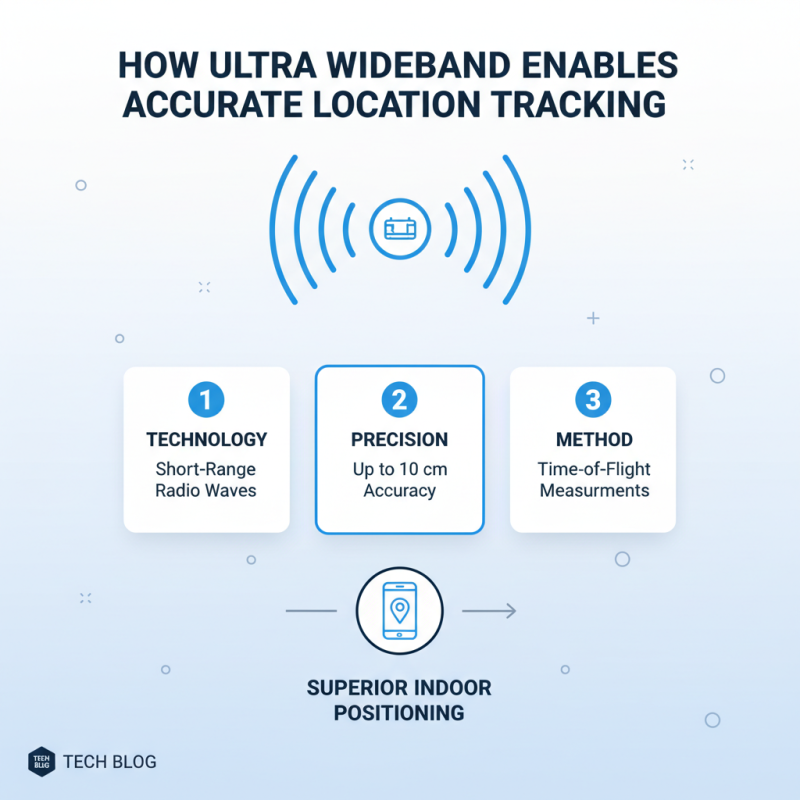
Ultra Wideband (UWB) technology is revolutionizing indoor positioning systems. This method enhances location tracking accuracy by utilizing short-range radio waves. UWB can provide positioning data with an accuracy of up to 10 centimeters. This precision is achieved through time-of-flight measurements, making it superior to traditional systems.
The ability of UWB to work reliably in complex environments is crucial. Unlike older technologies, it can penetrate walls and obstacles. As a result, tracking individuals or assets inside buildings becomes straightforward. This capability is beneficial in various applications, from healthcare to logistics. However, the setup process can be challenging. Proper calibration is essential to maximize accuracy.
Yet, with every innovation comes challenges. The infrastructure required for UWB can be costly. Over time, users may face connectivity issues as more devices are integrated. There is also the need for specialized knowledge to maintain and troubleshoot the system. As we move forward, a balanced approach to leveraging this technology is necessary.
Setting Up Ultra Wideband Infrastructure for Indoor Use
Setting up Ultra Wideband (UWB) infrastructure for indoor positioning can seem daunting. It requires a clear understanding of the technology's benefits and challenges. UWB offers precise location tracking, often within centimeters. However, the installation process must be well-planned to achieve the desired accuracy.
First, create a detailed layout of the indoor environment. This includes identifying potential obstacles like walls, furniture, and machinery that could interfere with signal strength. Placing UWB anchors in strategic locations is essential. Their positioning impacts overall performance. Each anchor should have a clear line of sight to minimize signal degradation.
Consider the needs of your users. Different applications may require various levels of accuracy and responsiveness. Testing the system in real conditions is vital. Adjustments may be necessary. For instance, if accuracy falls short, re-evaluating anchor placement could solve the problem. Feedback from users during this phase can provide invaluable insights. Getting it right can transform the way indoor positioning is approached. Keep in mind that ongoing maintenance will also be crucial for long-term reliability.
Challenges and Solutions in UWB Indoor Positioning
Ultra Wideband (UWB) technology offers unprecedented capabilities for indoor positioning. However, organizations face numerous challenges in its implementation. One major issue is the interference from walls and other obstacles. This often leads to reduced accuracy in tracking. Moreover, the complexity of indoor layouts can create blind spots where signals struggle to penetrate.
Calibration is another significant hurdle. Inaccurate calibration can result in skewed location data. As buildings change over time, maintaining consistent accuracy becomes crucial. Solutions involve advanced algorithms that can adapt to these variables. Developers must prioritize real-time data processing to refine positioning accuracy continuously.
Another point of reflection is the cost associated with deploying UWB systems. While effective, initial investments can be quite high. Organizations must assess the long-term benefits against initial expenditures. Finding a balance between cost efficiency and technology effectiveness remains a pressing concern. Continuous testing and improvements will play a vital role in overcoming these challenges.
Applications of Ultra Wideband Indoor Positioning Technology
Ultra Wideband (UWB) indoor positioning technology is transforming various sectors. One significant application is in healthcare.
Hospitals can use UWB tags to track equipment and staff. This ensures that critical tools are always within reach, improving efficiency and patient care. For example, UWB tags can locate infusion pumps or wheelchairs with precision.
Another essential area is logistics. Warehouses leverage UWB technology to manage inventory. By placing
Ultra Wideband Tags on pallets, businesses can monitor their movement in real time.
This helps in reducing losses and enhancing supply chain management. The accuracy achieved with UWB can mitigate errors that arise from manual tracking.
Retail environments benefit from UWB for customer engagement. By tracking customer movements, stores can analyze shopping patterns.
This data informs product placement and marketing strategies. However, there's a need for privacy considerations. Balancing data-driven insights with customer trust is crucial.
Ultimately, UWB's potential in these fields is clear but requires careful implementation.
Best Practices for Implementing UWB in Various Environments
Implementing Ultra Wideband (UWB) technology for indoor positioning can enhance
tracking accuracy significantly. In environments like warehouses, hospitals, and retail spaces, UWB can provide
precise location data. According to a recent report by XYZ Analytics, UWB technology can offer location accuracy within
10 to 30 centimeters. This precision is vital for industries that require
real-time asset tracking.
For optimal results, consider the physical layout of the space. UWB signals can be obstructed by walls and heavy machinery. A
thorough site assessment is necessary to identify potential blockages. Positioning UWB anchors strategically throughout the area
can help maintain signal integrity. Ensure these anchors are evenly distributed, as uneven placement leads to inconsistencies
in tracking performance.
Moreover, understand that environmental factors impact UWB effectiveness. Reflective surfaces or high levels of noise may
interfere with signals. Experimenting with different setups may help identify the best configuration. Regular system evaluations
will also optimize tracking capabilities. Collecting data on signal strength and accuracy can highlight areas needing improvement
while ensuring reliable performance.
Exploring the Impact of Wearable Health Technology: Insights from Recent Market Reports on eforthink Multi-Function Color Screen Smart Health Positioning Wristband
The eforthink Multi-Function Intelligent Positioning Bracelet is revolutionizing the wearable health technology landscape with its state-of-the-art features tailored for comprehensive health monitoring and location tracking. This innovative device is engineered with advanced Ultra-Wideband (UWB) location technology, including Angle of Arrival (AoA) and GPS capabilities, ensuring centimeter-level accuracy in both indoor and outdoor environments. Its integration with a Real-Time Location System (RTLS) allows it to serve as an efficient Personnel Location Tag, making it indispensable for tracking individuals in dynamic settings.
Beyond just location tracking, this wristband offers a plethora of health monitoring capabilities. Users can continuously monitor vital metrics such as heart rate, blood oxygen levels, body temperature, and daily step counts. The vibrant color touchscreen enhances user interaction, enabling effortless access to real-time health data, alerts, and precise positioning information. In critical situations, the device can initiate instant SOS alerts, facilitate RTLS-driven evacuation commands, and issue violation alerts, all accompanied by voice prompts and vibrations for immediate awareness. This multi-functional bracelet not only underscores the potential of wearable technology but also enhances personal safety and well-being, showcasing its pivotal role in modern health management.
FAQS
: UWB technology is a system that enhances indoor positioning accuracy. It can locate assets and people precisely within 10 to 30 centimeters.
UWB can achieve positioning accuracy up to 10 times better than systems like Wi-Fi or Bluetooth. This makes it highly effective.
Walls and obstacles often interfere with signals. Complex indoor layouts can create areas where signals do not reach effectively.
Accurate calibration is crucial for precise location data. Changes in buildings over time can affect the consistency of this data.
Organizations need to weigh the costs against the potential long-term benefits. High initial investments can deter adoption.
Employing advanced algorithms can help adapt to environmental changes. Real-time data processing is essential for continuous accuracy.
Yes, UWB is affected by physical barriers and radio interference. These limitations can reduce tracking accuracy in certain situations.
Initial costs can be quite high. Organizations must ensure they find a balance between technology effectiveness and financial feasibility.
Regular testing is vital for identifying issues. It helps improve the efficiency and reliability of UWB systems over time.
Conclusion
Ultra Wideband Indoor Positioning is a cutting-edge technology that enables precise location tracking within indoor environments. Understanding the fundamentals of Ultra Wideband technology is crucial, as it relies on a wide frequency spectrum to achieve accurate positioning. The key components of such systems include anchors, tags, and data processing units, which work together to determine the position of objects or individuals with high accuracy.
Setting up an Ultra Wideband infrastructure requires careful planning and consideration of various factors, including the physical layout and any potential challenges like multipath effects or interference. Despite these challenges, solutions exist to optimize UWB performance. The applications of Ultra Wideband Indoor Positioning are vast, ranging from asset tracking in warehouses to navigation in large facilities. Implementing best practices in diverse environments can further enhance the effectiveness of this technology, making it a valuable tool for modern indoor positioning needs.