
Leave Your Message
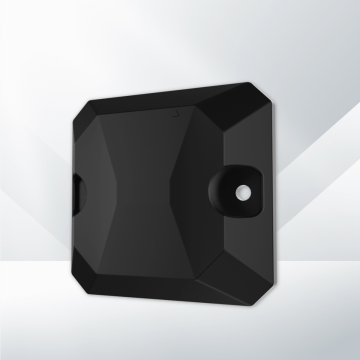
Explore our high-precision UWB tags and smart positioning cards designed to track both personnel and critical assets across complex healthcare facilities and construction sectors.
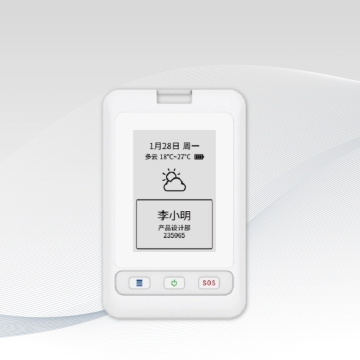
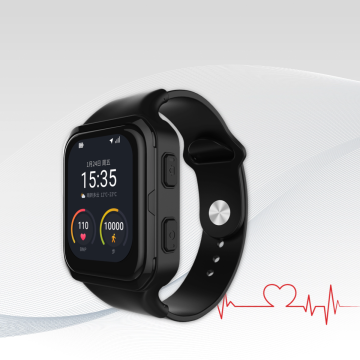
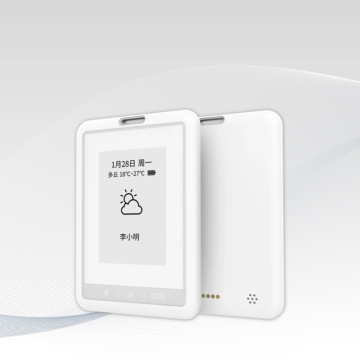

In modern industrial development, the crossover of technologies between distinct fields frequently yields groundbreaking advancements. A prime example is the application of Healthcare Real-Time Location Systems (RTLS) paradigms to construction site safety and tool tracking. Healthcare facilities demand clinical-grade, zero-latency, and highly reliable positioning systems to track life-saving medical equipment, secure patient safety, and manage critical hospital workflows. When these exact high-standard RTLS frameworks are adapted for construction environments, they offer unprecedented precision and robustness capable of surviving the chaotic, dynamic, and hazardous nature of a modern job site.
Construction sites are notoriously unpredictable. From heavy machinery moving continuously to workers operating at heights, safety risks are omnipresent. Moreover, the loss of high-value tools and equipment results in massive financial drains and project delays. By integrating UWB (Ultra-Wideband) powered RTLS—originally developed to meet the strict non-interference, high-density, and sub-meter precision standards of healthcare institutions—contractors can establish a comprehensive, fail-safe digital ecosystem. This integration ensures that every worker is accounted for, hazardous zones are dynamically geofenced, and tools are tracked down to the exact centimeter.
Unlike standard consumer-grade GPS or basic RFID, healthcare-derived RTLS utilizing UWB provides the reliable data density required to prevent accidents and secure capital assets in environments with heavy metallic interference.
The global construction market is facing a digital transformation. Historically, construction has been one of the least digitized sectors, relying on manual tracking, paper-based safety audits, and visual inspections. However, rising labor costs, stricter occupational safety regulations (such as OSHA standards), and the escalating cost of specialized tools are forcing a shift. Commercial developers and industrial contractors are actively looking for scalable IoT solutions to protect their workforce and optimize operational logistics.
Currently, the market is seeing a massive surge in the adoption of active RTLS. According to industry reports, the demand for RTLS in industrial applications is growing at a compound annual growth rate (CAGR) of over 20%. The crossover of healthcare RTLS technology into construction is driven by its proven ability to handle complex indoor-outdoor transitions, dense steel structures, and multi-path radio reflections. Enterprises are no longer satisfied with knowing a tool is "somewhere on the site"; they require real-time, three-dimensional coordinates to prevent theft and optimize tool utilization rates across multiple sub-contractors.
On any major construction site, workers spend an average of 15% to 25% of their day simply looking for tools, equipment, or materials. For a large-scale project, this translates to hundreds of thousands of dollars in wasted labor costs annually. Furthermore, tool theft and misplacement account for billions in losses globally each year. Adapting RTLS allows project managers to implement automated inventory checks, instant location queries, and geofence alerts that notify security the moment a high-value asset leaves the perimeter.
eforthink Technology relies on its self-developed UWB positioning technology to overcome multipath and non-line-of-sight influences in complex environments, achieving positioning accuracy better than 10 cm.
Ultra-Wideband (UWB) stands as the gold standard for real-time location tracking. By transmitting short radio pulses across a wide spectrum, UWB calculates the Time of Flight (ToF) and Angle of Arrival (AoA) with unmatched precision, making it immune to the interference common in dense industrial and medical settings.
View More Technology Details
10cm Accuracy, UWB-Powered Positioning Core for pinpoint asset and personnel tracking.

Sub-millisecond transmission of positioning data, critical for active collision warnings.

Single positioning base station can carry over 1000 tags, supporting crowded job sites.

Unaffected by multipath reflection and other radio interference factors in heavy metal zones.
In healthcare, geofencing keeps psychiatric patients or infants safe within designated zones. On a construction site, the same technology creates digital boundaries around high-risk areas—such as crane swing radiuses, deep excavation pits, and high-voltage zones. When a worker wearing an eforthink Smart Positioning Tag or carrying an Explosion-proof Work ID Card approaches a hazardous zone, the system triggers an instantaneous alert on the worker's wearable device (vibration/sound) and alerts site managers in the control room.
High-value equipment like calibration tools, welding machines, and heavy-duty drills often migrate across different floors and sub-contractor teams. By attaching ruggedized UWB tags to these tools, site supervisors gain 100% visibility. Furthermore, the system can track tool usage hours based on active movement, feeding data directly into preventative maintenance software to reduce tool failures and extend operational life.
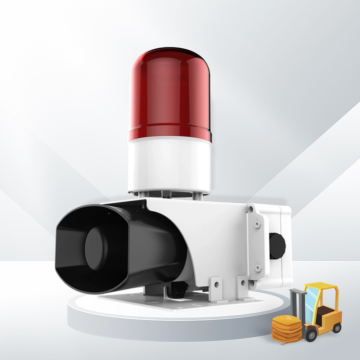
One of the most critical safety issues on construction sites is the interaction between heavy machinery (like forklifts, excavators, and loaders) and ground workers. By installing an Outdoor Ranging Host on the vehicle and equipping workers with positioning tags, the RTLS system calculates the exact distance between vehicles and pedestrians. If a worker gets within a critical distance, the vehicle automatically slows down or sounds an alarm, preventing fatal accidents.
In the event of an emergency, knowing the exact location of every worker is a matter of life and death. Traditional roll-calls are slow and prone to errors. With UWB RTLS, site safety officers can view a live dashboard showing the real-time location of all personnel. The system automatically verifies who has successfully reached safety muster points and pinpoints the exact location of any workers trapped inside the structure, allowing rescue teams to act with surgical precision.
Leveraging high-precision location data to drive safety, efficiency, and seamless asset management across your enterprise.

Reduces search time for misplaced assets by 70%+ and minimizes workflow bottlenecks.
Read More
Lowers workplace collisions by 90%+ in high-traffic areas like warehouses and assembly lines.
Read More
Eliminates tracking blind spots, ensuring 24/7 asset visibility across hybrid environments.
Read More
Boosts productivity by 15-25% through data-driven workflow redesign and asset flow analysis.
Read Moreeforthink offers comprehensive solutions that encompass hardware development, platform creation, deployment, and system integration across key industrial verticals.


As we look to the future, the commercial landscape of RTLS is moving from standalone tracking systems toward fully integrated IoT platforms. The convergence of 5G, Edge Computing, and AI-driven spatial intelligence is enabling the next generation of smart construction sites. Instead of simply recording history (where a tool was or where a worker walked), modern RTLS uses predictive analytics to identify risky behavior before accidents occur.
For example, by analyzing the spatial heatmaps of workers, AI algorithms can identify design flaws in site layouts that force workers to cross paths with heavy machinery too frequently. This allows managers to proactively redesign walkways and material storage areas, eliminating hazards at the source. Furthermore, the integration of RTLS with Building Information Modeling (BIM) software creates a "digital twin" of the construction site, mapping real-time physical locations onto virtual 3D models for unparalleled management clarity.
Another major trend is the shift toward open standards and interoperability. Historically, proprietary RTLS ecosystems locked enterprises into a single vendor's hardware and software. Today, organizations are demanding open API interfaces and standard UWB protocols (like IEEE 802.15.4z) to allow seamless communication between different tags, anchors, and enterprise software. eforthink is at the forefront of this trend, offering highly compatible UWB modules, base stations, and open aPaaS platforms that integrate easily with existing ERP and safety management systems.
eforthink is a national high-tech enterprise in the field of IoT specializing in high-precision location services.
Based on location sensing connectivity and the robust aPaaS service platform, eforthink offers partners one-stop location services that integrate hardware, software, and algorithms. Our service covers the entire lifecycle from product design, development, integration, production, manufacturing, sales, and comprehensive after-sales support.

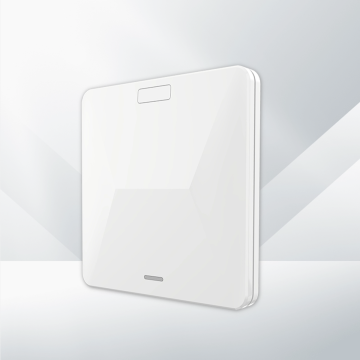
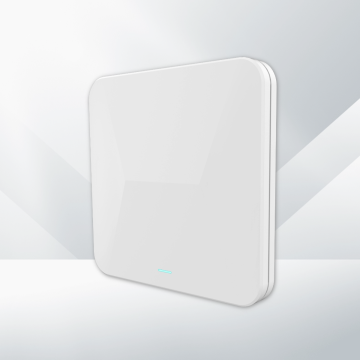
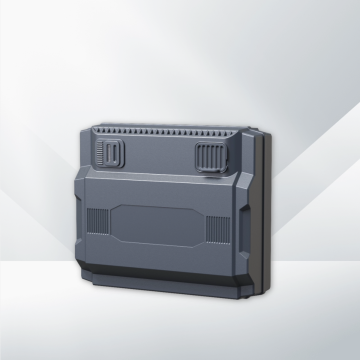
Industrial-grade, high-durability anchor systems designed to provide stable, long-range signal coverage under extreme environmental conditions.

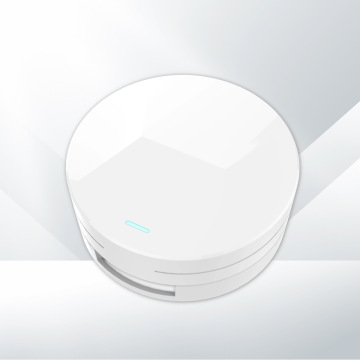

Our products and services are available in many countries and regions, helping industry leaders build smart, secure operations.


