









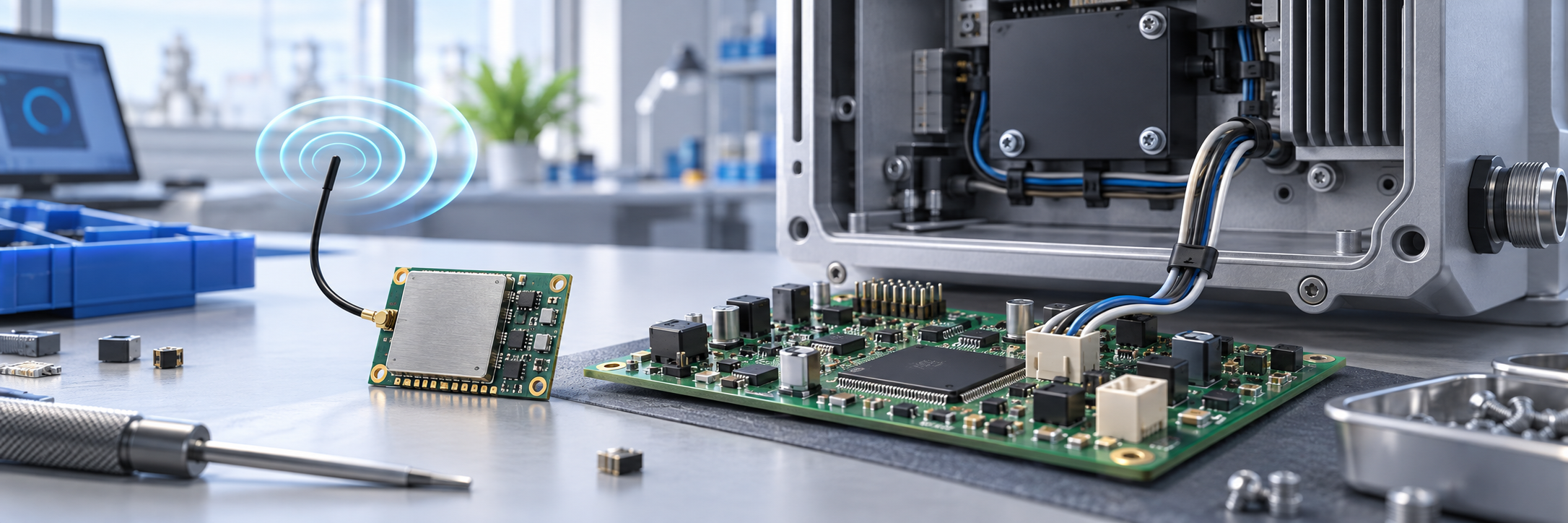
Eforthink’s Second-Generation UWB Positioning: Design and Security
Eforthink introduces its second-generation UWB positioning approach for industrial, automotive and infrastructure applications. The design uses IEEE 802.15.4z-related ranging capabilities and high-band operation to support location measurements in the selected, validated hardware and firmware configuration.
The company describes CH9 operation within its second-generation UWB system. Channel support, power behavior and positioning performance should be checked against the particular model, firmware and deployment conditions.

Features
- Positioning performance: UWB technology supports detailed timing measurements. Accuracy improvements over an earlier generation require comparative tests using the same environment, geometry and error statistic.
- Ranging security: Scrambled Timestamp Sequence, or STS, supports secure UWB ranging. It should not be described as encryption of all application data or a guarantee that every relay attack is prevented.
- Channel options: CH5 and CH9 availability depends on the product configuration. Supported channels must also comply with the rules of the intended market.
- Signal behavior: channel selection can help manage coexistence with other radios. UWB technology remains subject to reflections, shielding and interference; high-frequency operation does not eliminate these effects.
Product-Specific Compliance and Interoperability
IEEE-related implementation, FiRa interoperability certification and regional radio approval address different requirements. A standards-based UWB system is not automatically certified or approved in every market.
Integration with another vendor’s device requires compatible protocols and software. Any AES-128 implementation should identify what it protects, how keys are managed and how it relates to UWB ranging security.
Evaluating Performance in the Intended Environment
Eforthink reports internal tests in reflective and obstructed settings. A deployment review should request the test configuration before relying on a specific UWB positioning result.
Applications such as asset management and AGV-related monitoring also need suitable update behavior and system integration. Contact Eforthink to discuss the product configuration and supporting documentation for your project.