







UWB Warehouse Tracking System for a Singapore Apparel Retailer
A retailer supplying multiple stores needs warehouse records that reflect where stock is and how it moves. Eforthink describes a Singapore apparel project that combines personnel tracking and tagged material location within a shared management platform. The objective was to improve operational visibility as staff activity and inventory volumes grew.
Project Background: Warehouse Tracking System Requirements
The retailer operates a network of stores across Singapore, supported by a centralized clothing warehouse. Growing stock volumes and frequent handling made sorting, searching and record maintenance more difficult. Managers needed a clearer picture of both goods movement and available personnel.
The warehouse tracking system was selected to connect physical locations with warehouse workflows. Material tracking helps identify where an associated item or batch is located, while personnel tracking supports authorized operational coordination for staff carrying the assigned devices.
Eforthink’s project description presents the deployment as a response to search delays and management bottlenecks. Improvements in sorting time, error rate or loss should be measured against the retailer’s operational records.
Material Tracking** Implementation: Anchors and Tags
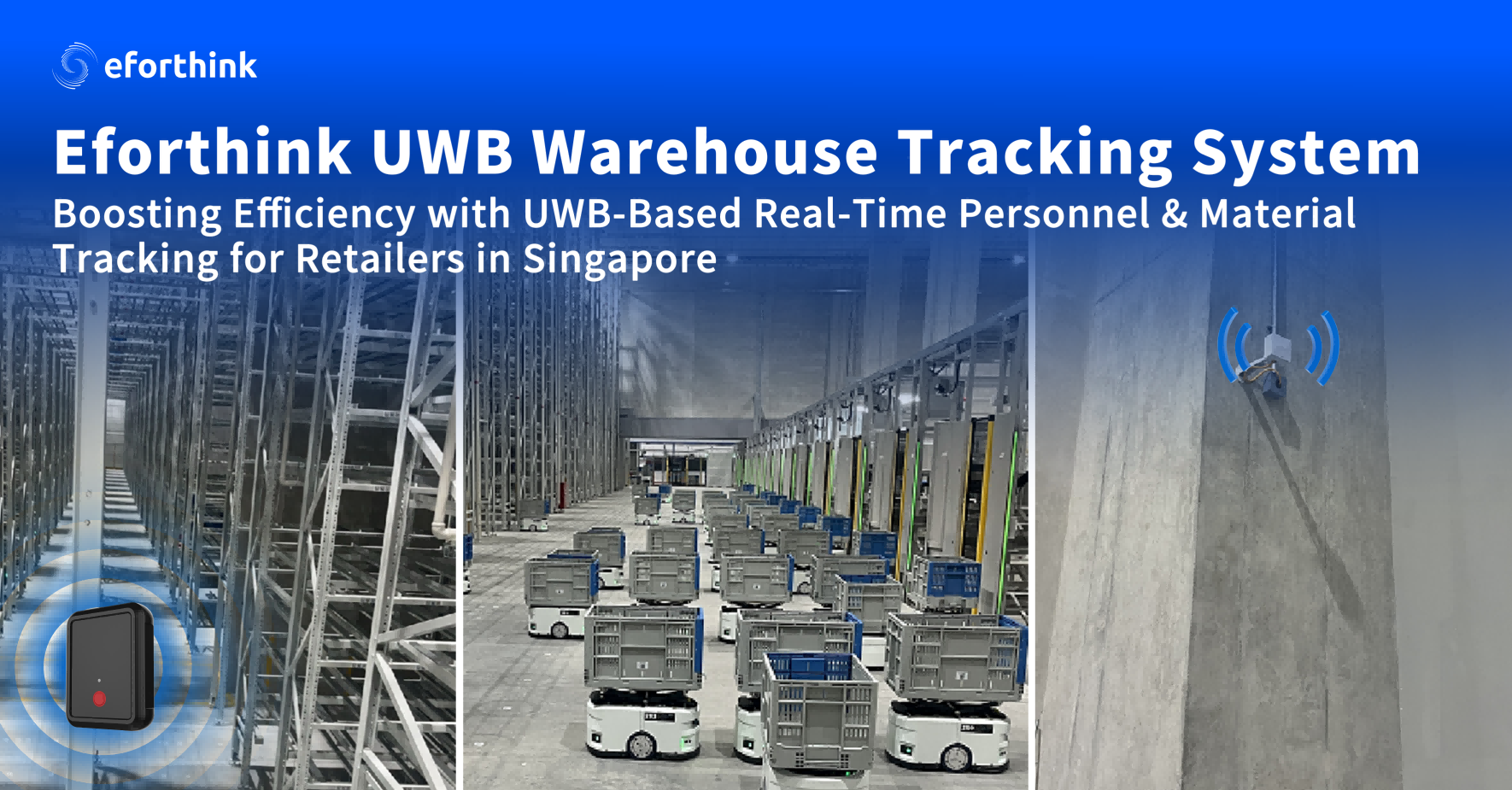
According to the published project description, the deployment included:
- More than 100 UWB base stations installed across the warehouse.
- More than 50 personnel positioning cards assigned to participating staff.
- More than 200 material tag cards associated with clothing inventory or lots.
They do not mean every employee or individual garment is necessarily tracked. The material tracking arrangement depends on how each tag is associated with an item, container or batch.
In the uplink architecture, tags transmit UWB signals and anchors collect the measurements used by the positioning engine. The warehouse tracking system displays available, timestamped positions alongside the relevant identifiers. It requires appropriate coverage, maintained device associations and the selected software integrations.
UWB technology supports fine-grained indoor measurements in suitable conditions. Shelving, metal structures, moving loads and anchor placement influence the achieved accuracy. The system should be evaluated along representative receiving, storage and dispatch routes.
Operational Value
Locating People and Materials
Material tracking helps staff search for an identified lot without relying only on a remembered shelf position. Authorized personnel tracking can also support task coordination where the participating staff and work areas are covered.
The warehouse tracking system brings these locations into a common view. Search efficiency still depends on accurate identifiers, current maps and device maintenance. Its purpose is to reduce uncertainty around the tracked resources, rather than claim that every warehouse blind spot is removed.
Connecting Location with Inventory Records
Inventory tracking benefits when movement events are associated with a stock identifier and the appropriate transaction. A location change can update the recorded position of a tagged lot through the warehouse integration.
UWB technology does not directly count the garments in a container or identify all stock attributes. Quantities and item details come from the associated inventory records, scans or business-system transactions. Material tracking adds location context to those records rather than replacing them.
This distinction allows the warehouse tracking system to support stock checks without claiming that radio positioning alone eliminates data-entry errors or prevents shortages.
Reviewing Misplacement and Long-Dwell Stock
Entry timestamps and location histories help managers identify when a tracked batch arrived and where it was last observed. Inventory tracking can connect that history with recorded stock status, supporting investigation of misplaced goods or long periods without movement.
The application can assist staff in finding exceptions, but it cannot guarantee that property loss will never occur. Tag association, coverage and the process for acting on an exception remain important.
Inventory Tracking: Tracing Events and Resolving Exceptions
Available personnel tracking and material movement records can be reviewed together with event timestamps. Authorized users can examine the sequence of recorded activity when investigating a delay, handling error or disputed movement.
Records should be interpreted within their coverage and retention limits. A missing observation is not proof of a person’s action, and location history should be used with other operational evidence.
Applying the Approach to Retail Warehousing
The Singapore project illustrates how a warehouse tracking system can connect identified resources with a shared operational view. Material tracking, inventory integration and event review address related but distinct needs within the workflow.
For another warehouse, start with the stock unit being tracked, the processes requiring visibility and the appropriate staff participation. These decisions determine tag selection, coverage and data interfaces.
Contact Eforthink to discuss UWB technology for your receiving, storage and dispatch operations. A scoped pilot can establish the expected accuracy, update behavior and workflow benefit before expanding the deployment.