






How to Choose an Industrial Asset Tracking System
An industrial asset tracking system connects the location of tools, materials, vehicles, and equipment with daily operations and asset visibility. Teams can find tagged objects, follow material movement, and receive alerts when an asset enters or leaves a defined area. Selecting an asset tracking system starts with the object, the working environment, and the decision that location data needs to support.
Define the operational decision
Start by deciding what the asset tracking system must show. Finding a material cart in a storage zone differs from identifying a tool at a specific workstation. The required accuracy, update frequency, movement history, and alarm rules of the asset tracking system should follow that distinction.
An asset tracking system can provide presence detection, positioning along an aisle, or coordinates across a floor. Suitable deployments can also support three-dimensional coordinates. Match the configuration to the actual storage layout and process rather than applying one accuracy target everywhere.
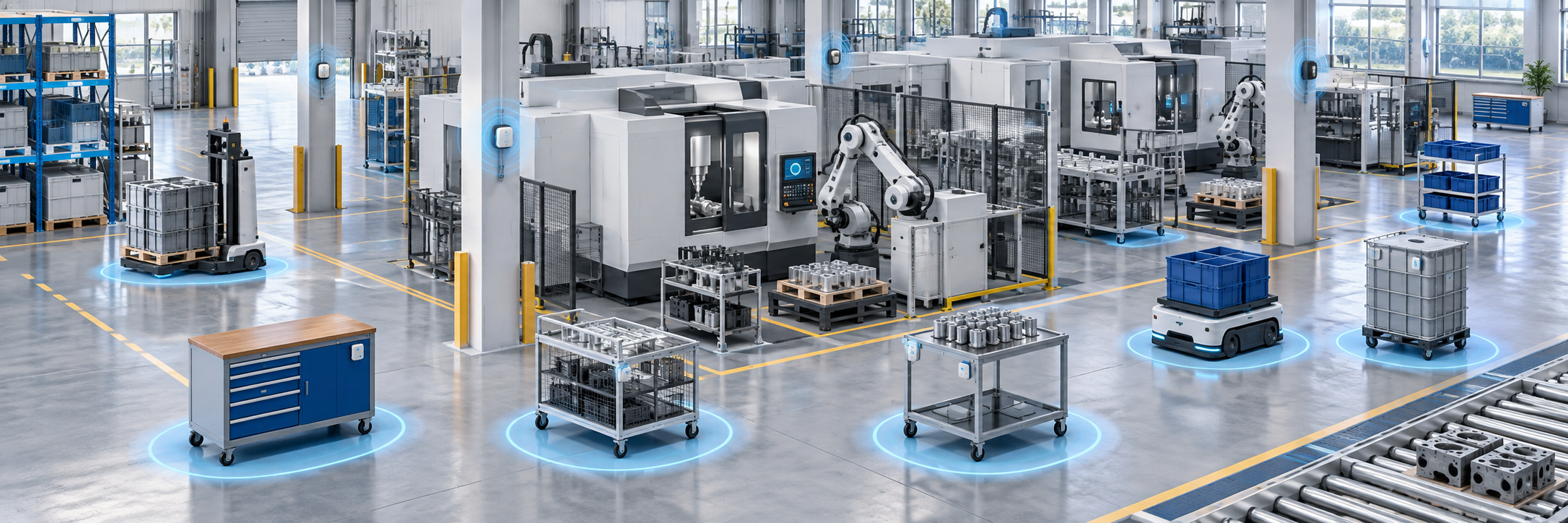
Match technology to the environment
Metal racks, machines, partitions, and moving inventory affect radio coverage. A UWB asset tracking system uses tags, fixed positioning infrastructure, and a positioning engine to calculate location. UWB supports precise timing measurements for industrial positioning; achieved accuracy depends on obstructions, anchor placement, and configuration.
For indoor and outdoor operations, an asset tracking system can use a suitable fusion architecture. UWB serves areas requiring higher precision, while iBeacon and GNSS address different coverage requirements. Select the technology mix around the movement route.
Evaluate the complete asset tracking system
Compare the components and operating requirements together:
- Tags selected for the tracked object and mounting surface
- Anchors positioned for the required coverage and geometry
- Power and network connections for the selected infrastructure
- Asset tracking software with maps, search, geofences, and trajectory playback
- Battery information, low-power reminders, and device status
- Interfaces for MES, WMS, ERP, or other connected systems
- Installation, commissioning, replacement, and ongoing maintenance
The cost of an asset tracking system extends beyond tag price. Cabling, coverage, software connections, and battery maintenance also affect the deployment. Compare those requirements before selecting the asset tracking system for a larger facility.
Select tags around the workflow
An asset tracking system may use different terminals for tools, material carriers, and personnel. Tag dimensions, protection, attachment, and power supply must fit the object. EFORTHINK's product range includes tool positioning terminals, asset tags, wearable devices, and explosion-proof device options.
Keep the tag ID associated with the correct business asset when devices are installed or reassigned. An asset tracking system depends on that relationship to display the correct location record. Plan who handles charging, replacement, and tag assignment.
Connect location with process information
An asset tracking system can connect location, time, geofences, and business rules to material transfers and work orders. Define which application owns the asset record and how location events enter the existing workflow. An asset tracking system supplies spatial information; production status also depends on connected business records.
Begin with a representative area containing normal racks, equipment, and traffic. Check coverage, update behavior, zone events, and software connections before expanding the asset tracking system. Include actual tag mounting and movement in commissioning.
EFORTHINK combines positioning hardware, algorithms, software, and integration support for an industrial asset tracking system. Share your tracked objects, facility dimensions, accuracy target, and interfaces to plan an asset tracking system around your operation.