
UWB Personnel Tracking for an Electronics Manufacturing Campus
Electronics manufacturers face pressure to improve production and daily operations. This project used personnel tracking to connect workforce management with campus services in a smart factory environment.
Challenges
The campus combined production and residential areas, creating several management challenges:
- Traffic and Visitors: Material vehicles, waste-removal trucks, finished-goods transport, and visitors complicated industrial safety
- Equipment Downtime: Delayed fault handling interrupted production.
- Attendance Congestion: Card swipes and facial-recognition checks caused queues during peak periods.
- Communication Restrictions: Mobile-phone bans limited workforce scheduling and information delivery.
- Confidential Areas: Restricted zones required stronger access supervision.
- Limited Oversight: Workflow monitoring, hazardous-area alerts, and fire-inspection records needed improvement.
- Employee Retention: Repetitive work and limited engagement contributed to staff turnover, which the original project account described as above industry averages.
Solution
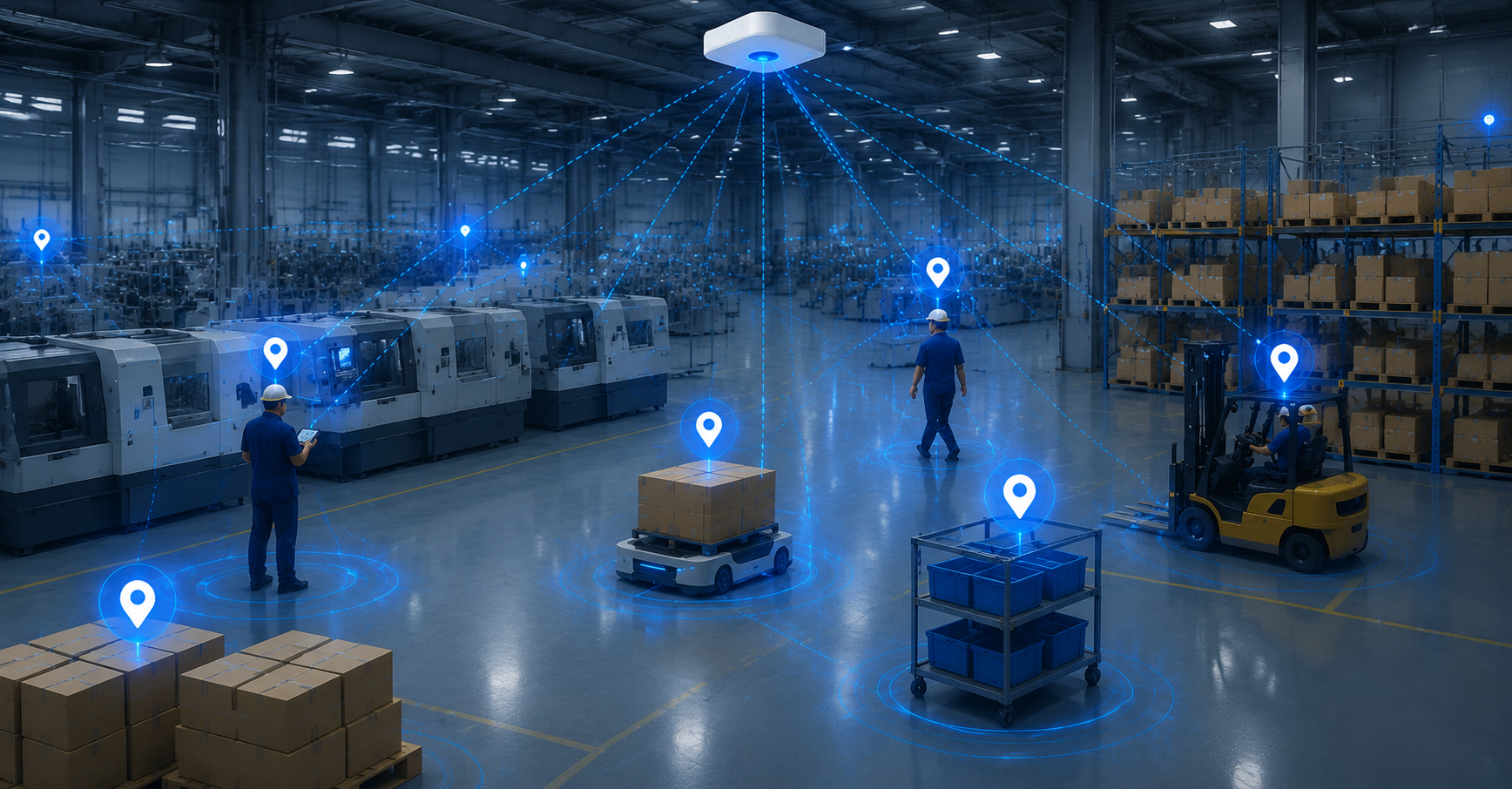
The employee location tracking system used UWB positioning with reported accuracy of 10 cm in this project. UWB anchors were installed across the campus, with wearable RTLS tags for personnel and mounted tags for vehicles.
Customized E-Ink badges and PDAs connected worker tracking with access control, on-site payments, video surveillance, equipment alarms, fire safety, and broadcast systems. Smart wristbands provided heart-rate, blood-pressure, and step-count information for employee wellness initiatives.
Core functionalities included:
- Integrated Employee Badges: Personnel tracking, automated attendance, access control, alarm triggers, and SMS notifications were managed together.
- Confidential Zone Protection: Geofences generated alerts for unauthorized entry attempts, supporting industrial safety
- Asset Security: Alarms identified high-value assets moving outside designated zones.
- Visitor Management: Personnel trackingsupported approved routes, movement-history monitoring, and access restrictions.
- Emergency Response: Fire-safety integration delivered evacuation alerts through the connected systems.
- Automated Inspections: Worker trackingsupported route planning, activity records, and inspection analysis.
- Equipment Maintenance: Fault alerts were assigned to technicians through PDAs and tracked to resolution.
- Worker Wellness: Wristband measurements supported employee-care programs; these functions are described as wellness information rather than clinical diagnosis.
Conclusion
The employee location tracking system brought location information, 3D visualization, and campus services into a shared Industrial IoT environment. Movement records made workforce activity more visible while supporting maintenance coordination and access management.
The project combined safety management with employee services. Its contribution to the smart factory was coordinated operational information.