





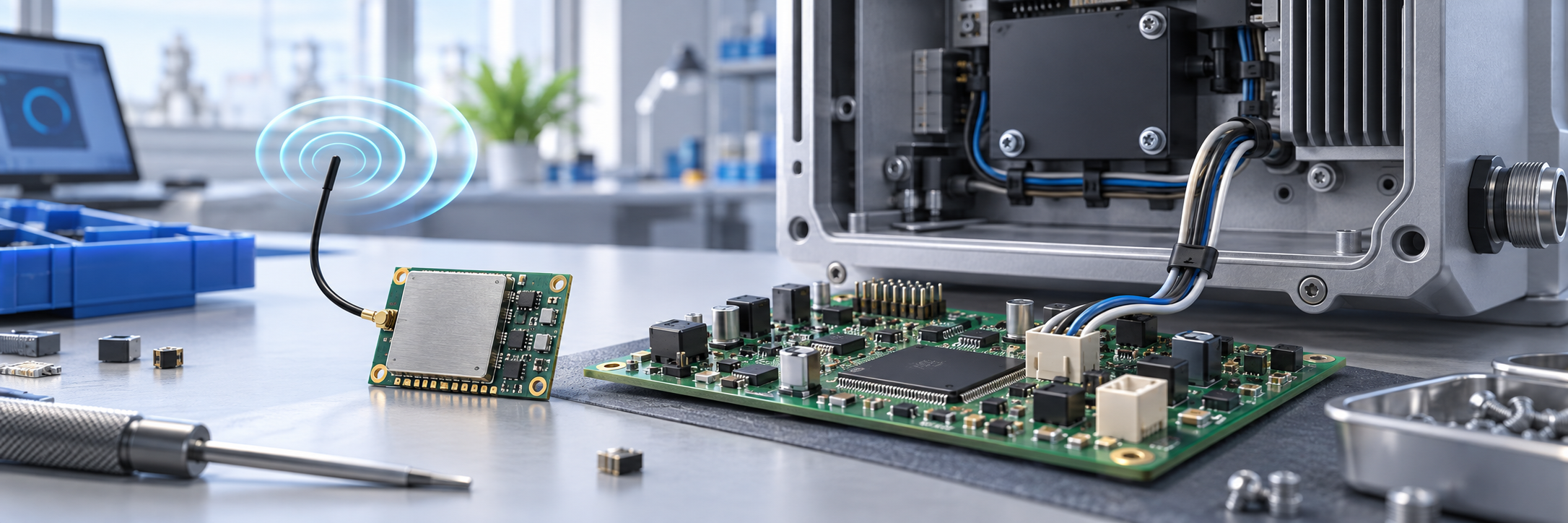
UWB Tool Tracking System for Industrial Production
A tool tracking system gives shared production and maintenance tools a location record for equipment tracking. When a torque wrench, test instrument, or movable tool changes workstations, teams need to know where it is and how it has moved. A UWB tool tracking system connects that movement with a visual map and configured process areas.
Select tools around the workflow
Begin with tools that move between stations, require frequent searches, or participate in controlled production steps. A tool tracking system can show the location of tagged tools and retain movement history for later review.
Define what the tool tracking system needs to support: locating a tool, identifying arrival at a workstation, detecting an unexpected exit, or measuring time in a defined area. Set the accuracy and reporting frequency of the tool tracking system around those decisions.
How the positioning architecture works
A tool tracking system uses a terminal attached to the tool, fixed UWB infrastructure, and positioning software. The positioning engine calculates location from the radio measurements and presents it through the application or a connected manufacturing system.
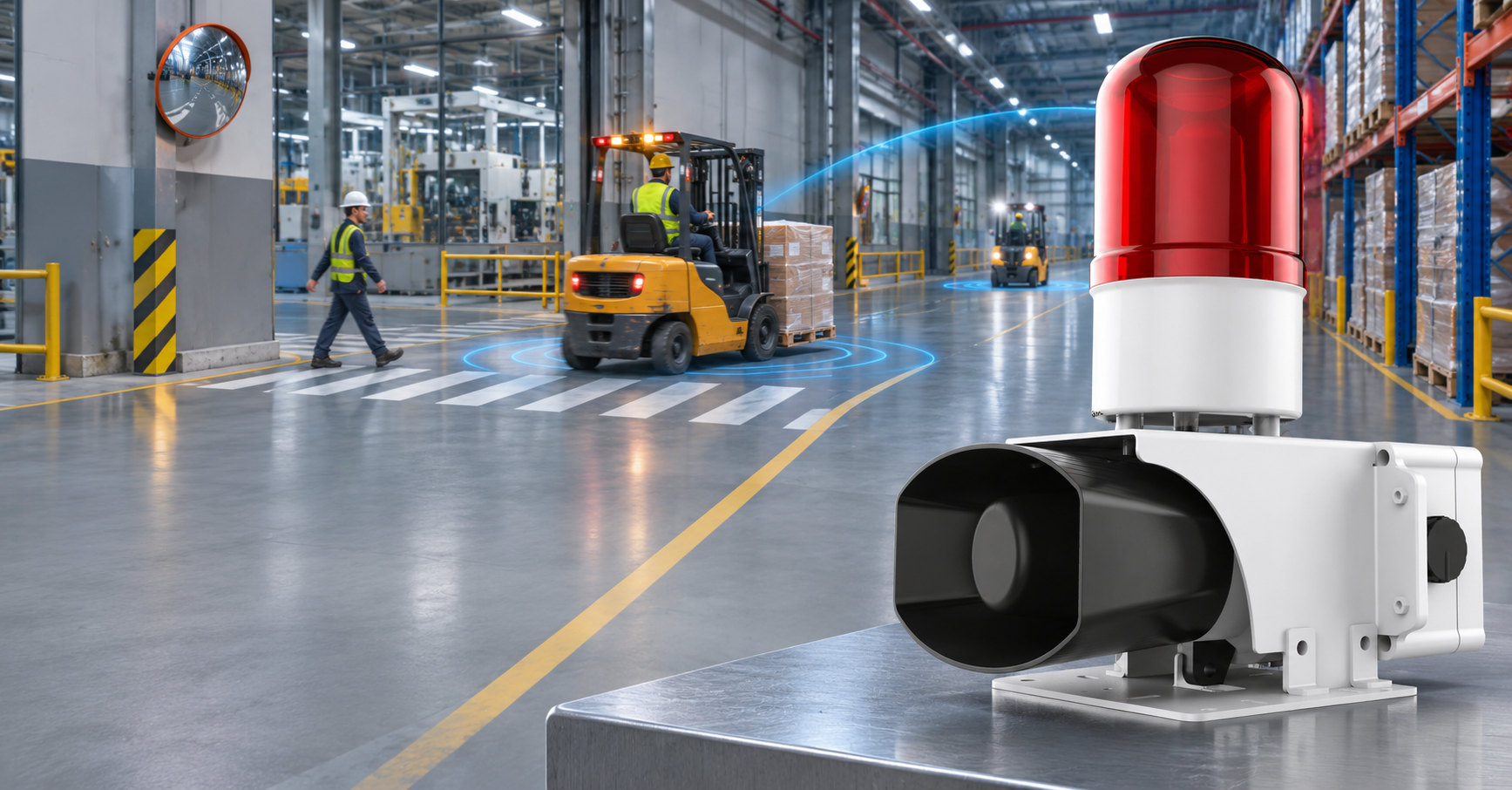
The EFORTHINK UWB Tool Positioning Terminal supports UWB and AoA positioning and includes LED reminders. Within a tool tracking system, it supports functions such as electronic fencing, trajectory playback, video linkage, and dwell detection. Select the deployment around the actual tool and workstation layout.
Connect tool position with production
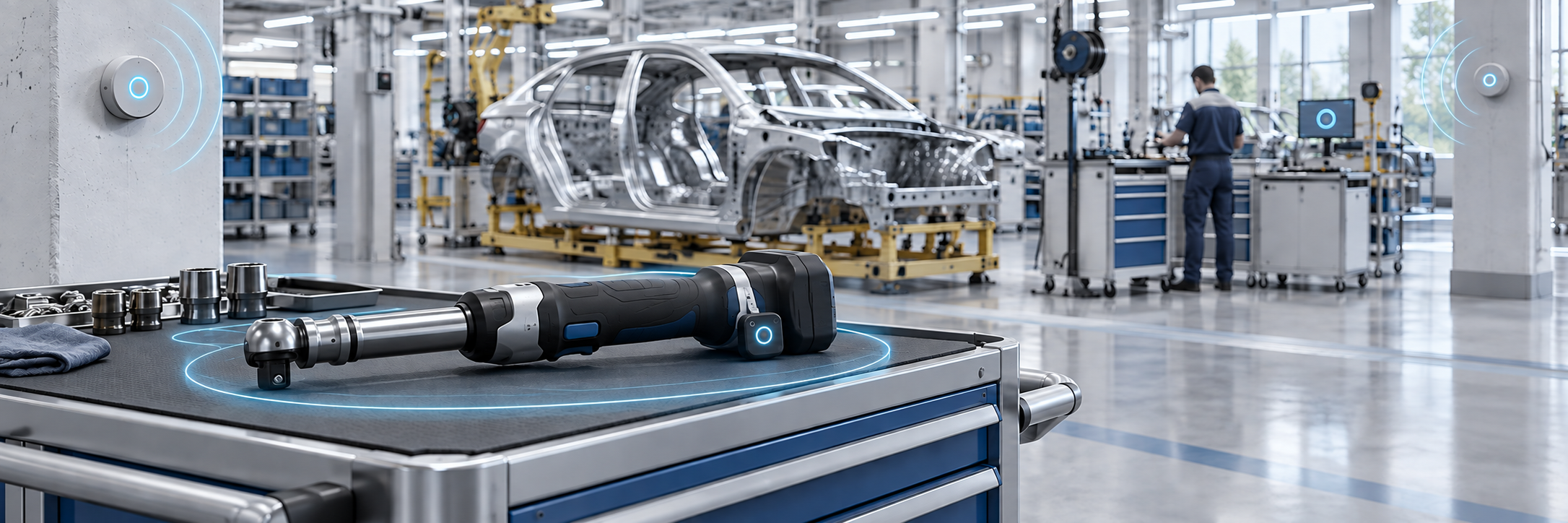
A tool tracking system can connect torque-wrench positioning with MES and tool-management records. The automotive workflow uses tool location to check the relationship between a tightening tool and its assigned production stage.
Location alone does not establish tightening completion or quality. The tool tracking system supplies position, while the connected tool and production systems supply operation records. This manufacturing asset tracking workflow combines those records to support process coordination and help address missed steps.
Configure the tool tracking system around stable workstation boundaries. Define how tool identity, station identity, timestamps, and work orders are associated before using location events in production.
Fit the terminal to the tool
Installation should preserve the tool's grip, balance, controls, and maintenance access. A tool tracking system needs a mounting position that protects the terminal and maintains useful radio visibility during normal handling.
Consider dimensions, weight, charging, battery reminders, enclosure material, and update rate. Plan the reassignment process so the tool tracking system continues to show the correct tool after a terminal is replaced or moved.
Make location useful to operators
Operators should be able to search the tool tracking system by object identity and view the current location. Movement history, geofence alerts, and dwell information help supervisors review transfers between work, storage, and maintenance areas.
Check the tool tracking system with representative tools during normal shifts. Include mounting durability, location continuity, update behavior, charging, and event delivery. Coverage around machines and metal structures matters as much as performance in an open area.
EFORTHINK combines tool positioning terminals, anchors, algorithms, software, and integration support for industrial operations. Share your tools, workstation layout, process rules, and MES interfaces to configure a tool tracking system for your production environment.