







What Is UWB RTLS? Components, Benefits, and Industrial Uses
Why Real-Time Location Visibility Matters
Industrial teams need to know where equipment, materials, and people are located. Manual searches, fixed records, and barcode scans provide useful observations but may leave gaps when resources move between recorded events.
A real time location system collects positioning observations and presents updated coordinates for tracked objects. In large factories and warehouses, these updates help teams understand current distribution and investigate movement through the facility.
UWB technology provides precise radio timing for this location layer. Eforthink combines the radio infrastructure with management applications to support industrial visibility. Performance depends on the chosen configuration, coverage, update rate, and conditions at the site.
What Does a UWB RTLS Include?
An RTLS identifies and locates objects or people through a combination of wireless devices, positioning calculations, and application and operational management tools. A typical uplink installation contains three main components.

Positioning Tags
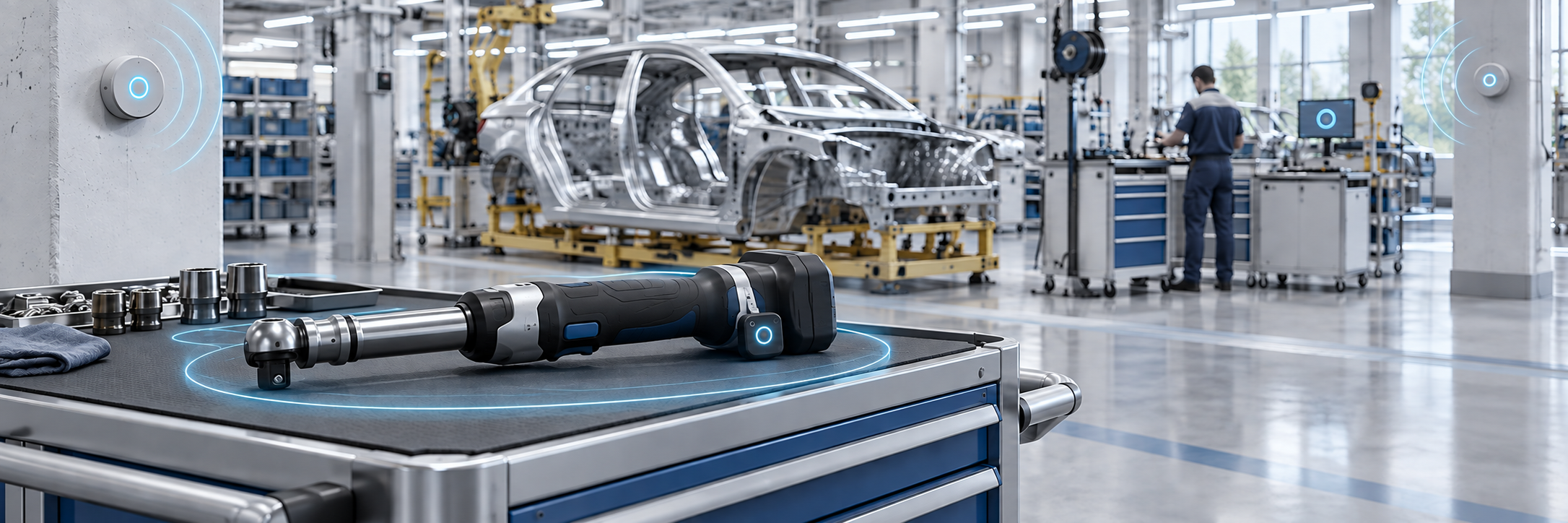
Tags attach to industrial tools, materials, equipment, or vehicles, or are carried by personnel. Their transmissions allow the system to associate location measurements with a specific identifier. The recorded identifier is then linked to the relevant asset or person.
UWB Anchors
UWB anchors receive tag signals at known positions. They collect timing measurements and send data to the positioning engine, which calculates coordinates. In TDoA deployments, receiver synchronization enables comparison of arrival times; time-of-flight configurations use signal travel time for ranging.
RTLS Software and Location Management Platform
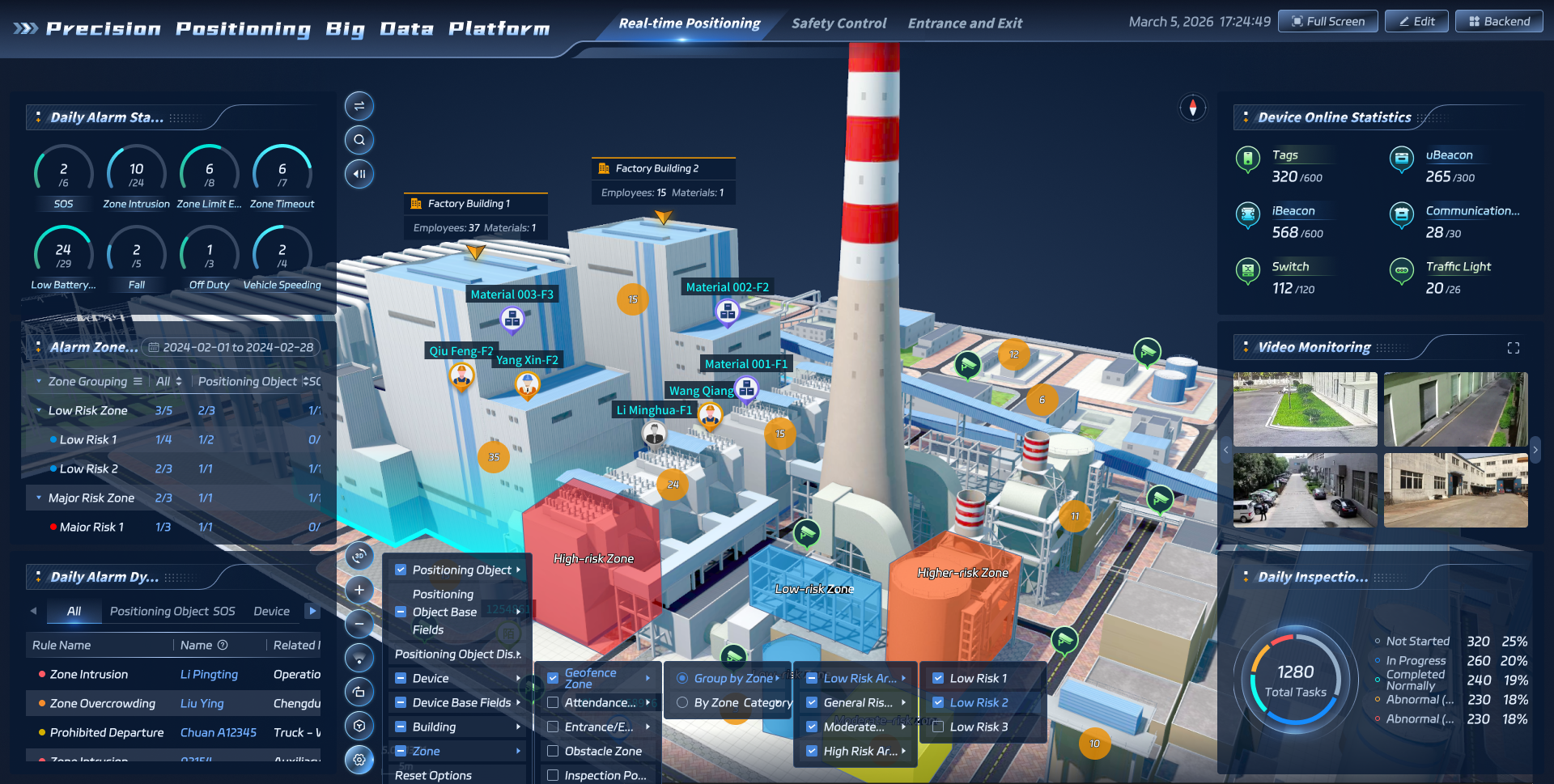
RTLS software displays current positions, historical routes, and electronic geofences. Management modules connect location records with assets, personnel, and operational events. The platform can identify configured area-rule violations and provide records for review.
Eforthink's UWB RTLS brings compatible tags, fixed and surveyed infrastructure, and applications into one deployment. The components must be selected and configured together for the intended coverage and precision. A shared identifier links each radio device with its business record. Maintaining that association helps the platform distinguish the resource itself from a tag that may later be reassigned to another item during operations.
Why Choose UWB for RTLS?
Metal equipment, production lines, shelving, and moving vehicles create challenging radio environments. Some configurations of Wi-Fi and other wireless systems provide adequate area-level information, while finer tasks need more precise measurement.
UWB technology uses wideband signals and fine timing to support ranging and positioning. Eforthink's high-precision system uses the IEEE 802.15.4 family of standards as its radio foundation. Standards support alone does not establish an application's accuracy or interoperability with every device.
Key Advantages
High Positioning Accuracy
UWB RTLS supports centimeter-level positioning in suitable deployments. This can help distinguish materials, tools, and nearby work areas more precisely than meter-level configurations. Actual results depend on installation geometry, obstacles, hardware, and system settings.
Performance in Complex Environments
The timing characteristics of UWB technology help address multipath propagation and interference. It remains affected by radio conditions and obstructions, so factories and warehouses need coverage planning and commissioning to establish reliable performance.
Real-Time Location Visualization
RTLS software presents asset distribution, personnel positions, equipment movement, and historical trajectories. These views help teams inspect operational activity and connect physical movements with workflow records. Location updates provide observations; business rules determine their operational meaning.
Main Industrial Applications
UWB Asset Tracking
UWB asset tracking locates tools, materials, and equipment as they move through storage and production. Teams can search current positions and review history when investigating missing items or process delays.
Personnel Location Management
Personnel tracking supports workforce visibility, restricted-area rules, and geofencing. Personnel tracking data can assist safety response and operational reviews when access permissions and response procedures are properly configured.
Warehouse and Logistics Management
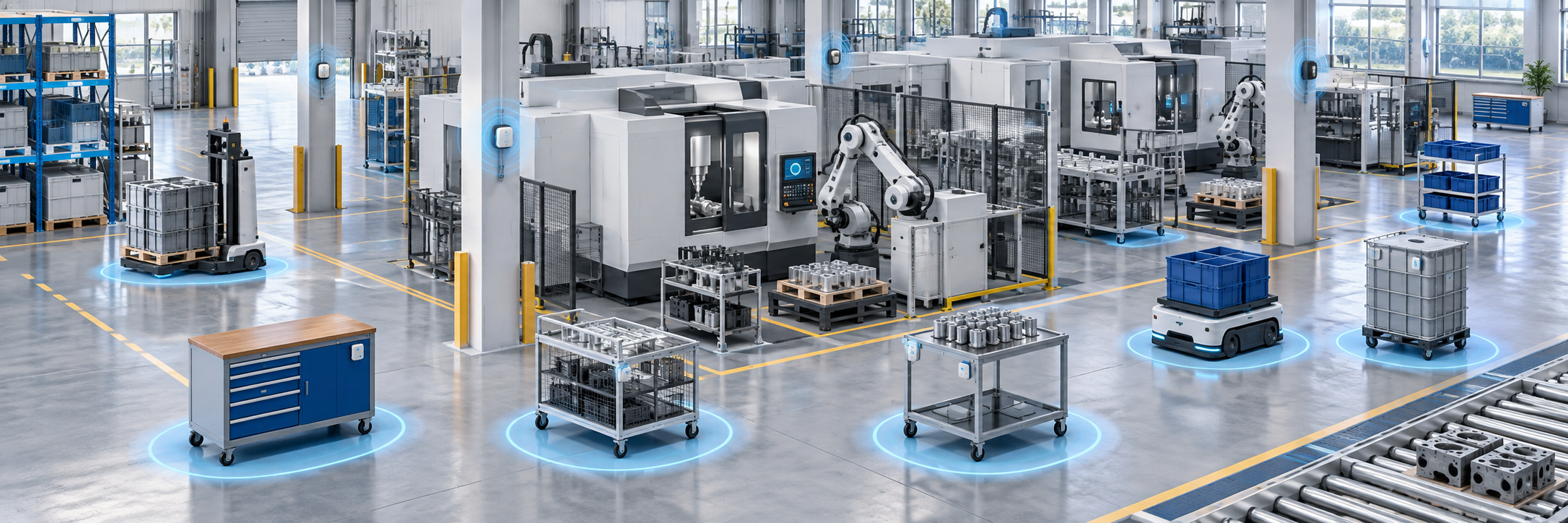
UWB RTLS helps locate forklifts, pallets, carts, and materials. Combined with warehouse records, UWB asset tracking gives teams a clearer view of resources moving between storage and handling areas.
Why Choose Eforthink?
Eforthink combines positioning algorithms, industrial hardware, RTLS software, and application experience. UWB anchors and compatible tags supply the measurements used to build this location infrastructure.
Connecting Physical Activity with Digital Records
UWB RTLS supplies location context for asset, workforce, and workflow management. Select the deployment around the operation's accuracy, coverage, and integration requirements.
Explore Eforthink's high-precision positioning system and industrial asset solution to discuss suitable hardware, software, and implementation options.
Explore eforthink UWB RTLS Solutions.
Discover how UWB positioning technology can help improve asset tracking, personnel management, and industrial visibility.
Recommended pages: