
Industrial RTLS for Smart Manufacturing
Build a spatial data layer for smart manufacturing with real-time visibility of workers, materials, tools, vehicles, and work-in-process.
Eforthink combines UWB RTLS with multi-technology positioning to support industrial tracking across smart factory production, maintenance, logistics, and safety workflows.
Eforthink combines UWB RTLS with multi-technology positioning to support industrial tracking across smart factory production, maintenance, logistics, and safety workflows.
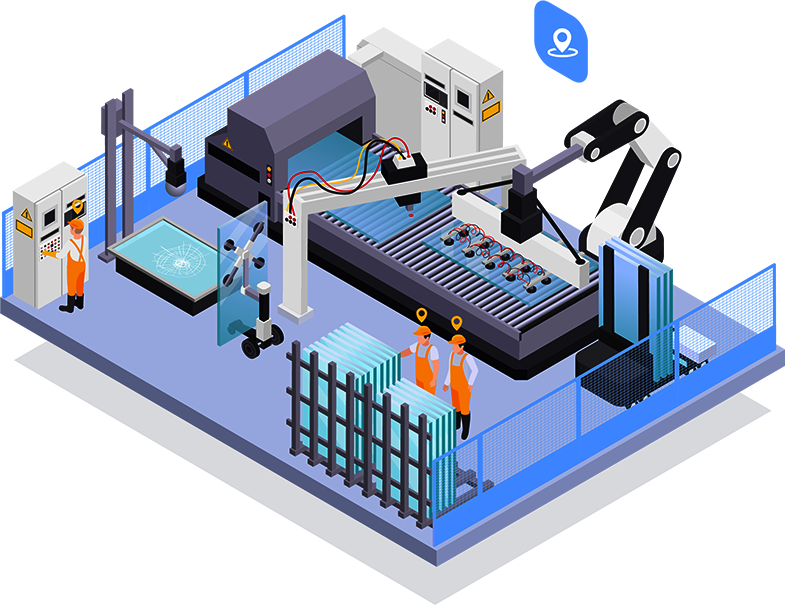
APPLICATION OVERVIEW
CORE FEATURES
KEY ADVANTAGES
COMPATIBLE HARDWARE
INDUSTRY CASES
APPLICATION OVERVIEW
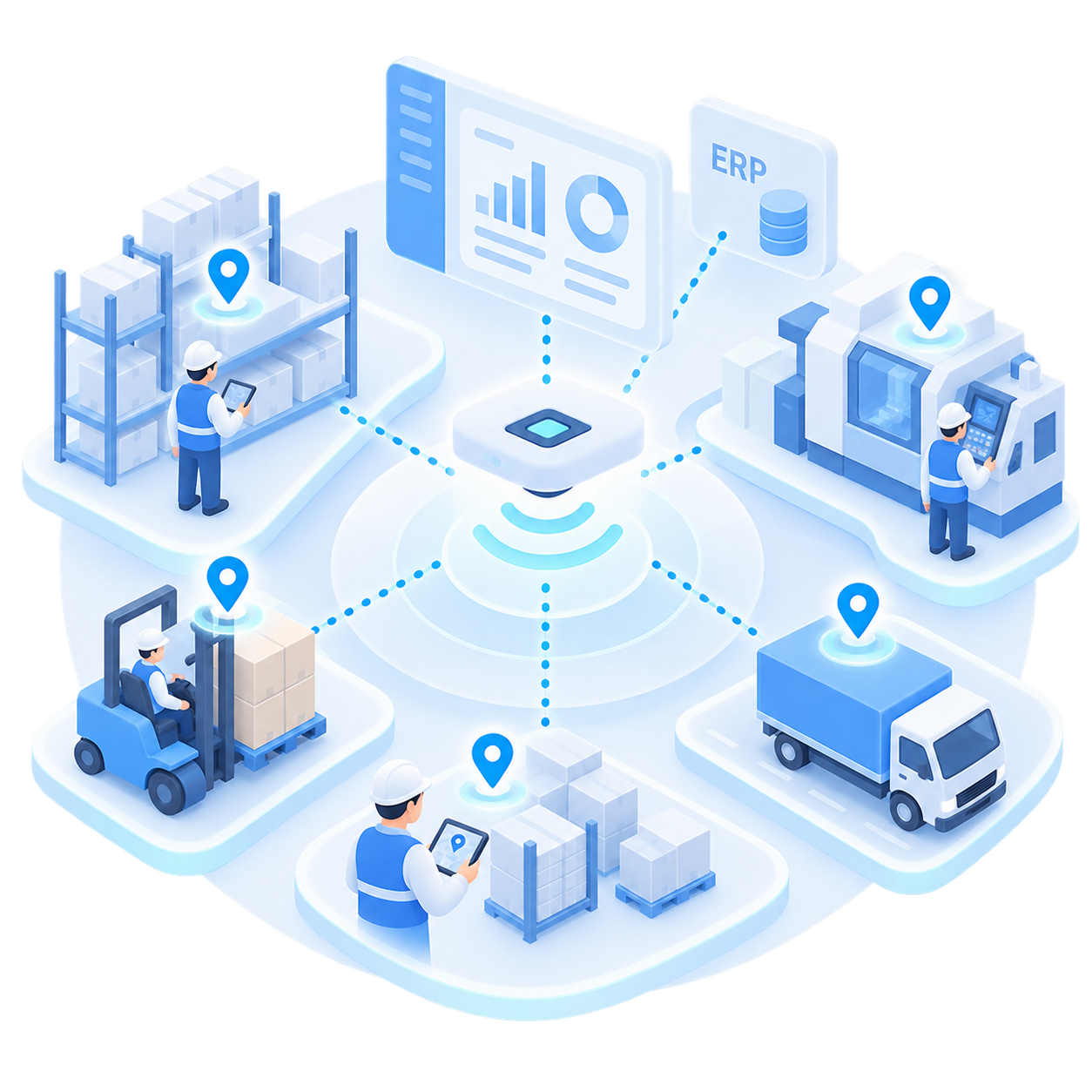
Eforthink Industrial IoT Positioning Solutions combine UWB and AoA positioning with RTLS software to provide real-time location data for personnel, materials, tools, and vehicles across smart manufacturing and digital factory environments.
The platform supports industrial tracking in production areas, warehouses, maintenance zones, logistics routes, and restricted areas. Location events can be integrated with ERP, MES, WMS, TMS, RFID, barcode, equipment fault alarms, and other enterprise systems to connect physical movement with operational records.
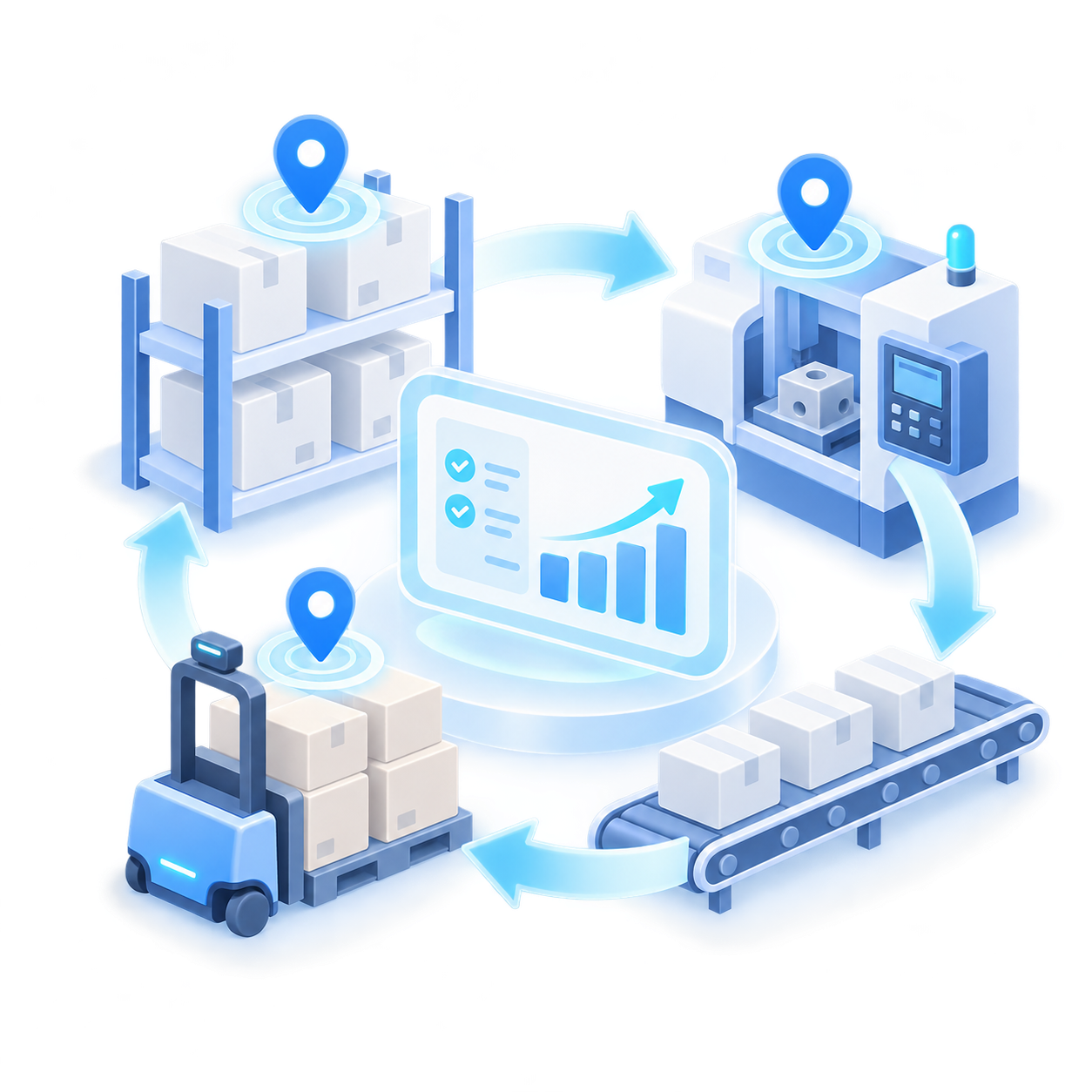
For smart factory operations, the system provides location visibility for resources moving across production and internal logistics workflows. Material tracking and equipment tracking data can help teams locate resources, review movement history, identify dwell-time exceptions, and coordinate production tasks.
The personnel tracking system supports workforce visibility, geofencing, emergency calls, movement review, and location-based dispatching. It can also support industrial safety by providing proximity alerts and location context in areas where people and mobile equipment operate together.
Instead of replacing existing business software, Eforthink RTLS technology adds spatial data to digital factory workflows, helping manufacturing teams connect location, time, identity, and process information.
For smart factory programs, UWB RTLS provides the spatial layer needed to connect shop-floor movement with a production tracking system. This helps a digital factory use location events to coordinate resources, review process status, and improve visibility without replacing enterprise applications.
CORE FEATURES
 Dynamic Workforce Optimization
Real-Time Location Tracking for Assets
Visual-Verified Monitoring
Geofencing with Alerts
Automated Stockkeeping
Behavioral Insights
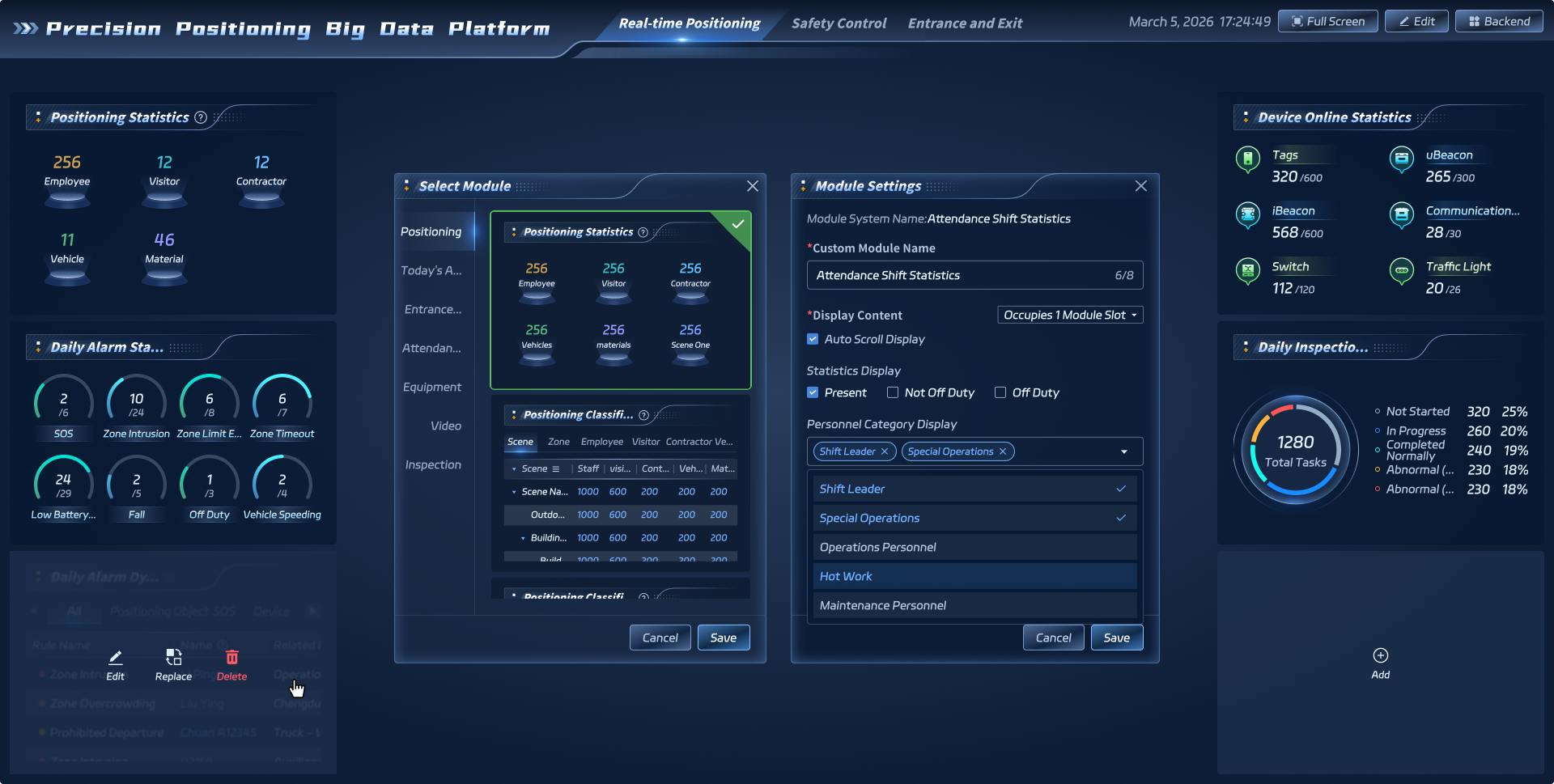
Dynamic Workforce Optimization![Personnel tracking for dynamic workforce optimization with real-time worker location, task dispatch, area occupancy, maintenance coordination, and location-based alerts in a smart factory]()
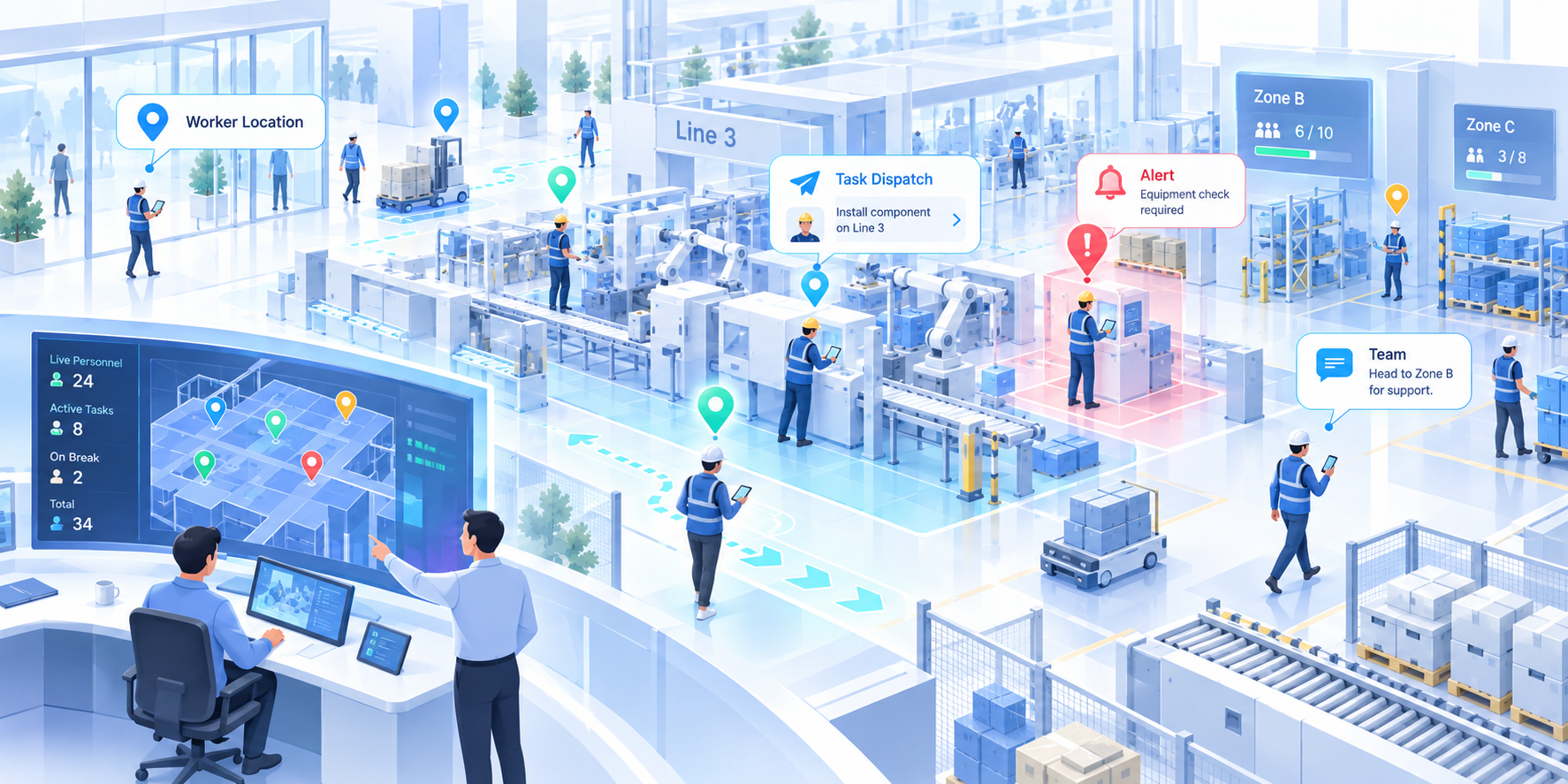
Use personnel tracking to view worker locations and support location-based scheduling, task dispatching, and workforce coordination. Location records can be used to analyze movement, dwell time, and area occupancy.
For maintenance scenarios, workforce location data can connect with equipment fault alarms and work orders so personnel can be located and dispatched based on position information.
Instant Communication
Send location-based alerts, instructions, or emergency notifications to designated staff through supported terminals and system functions.
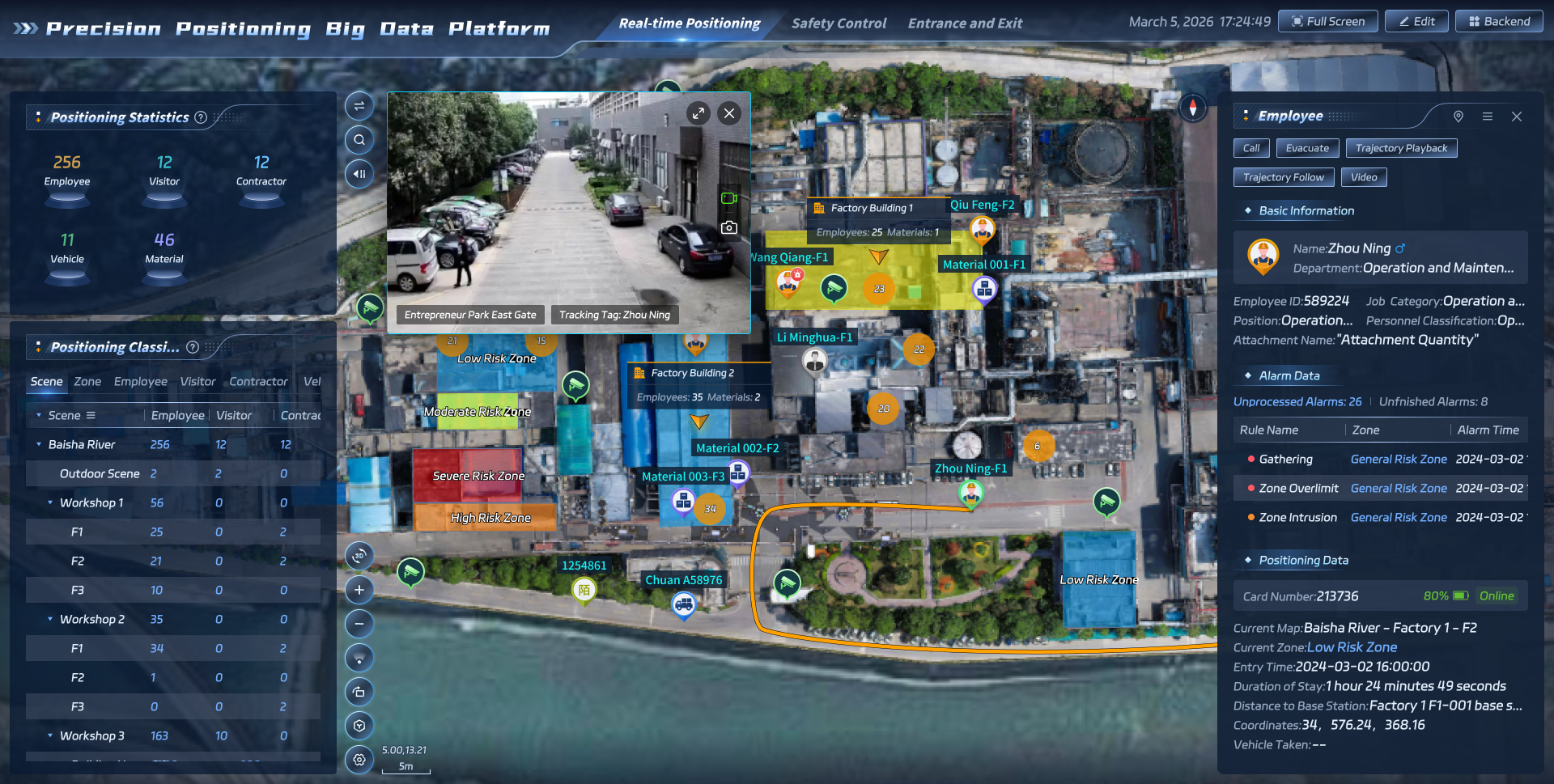
Real-Time Location Tracking for Assets![Industrial tracking with material tracking, equipment tracking, RFID barcode identification, asset search, inventory visibility, and movement history in a smart factory]()
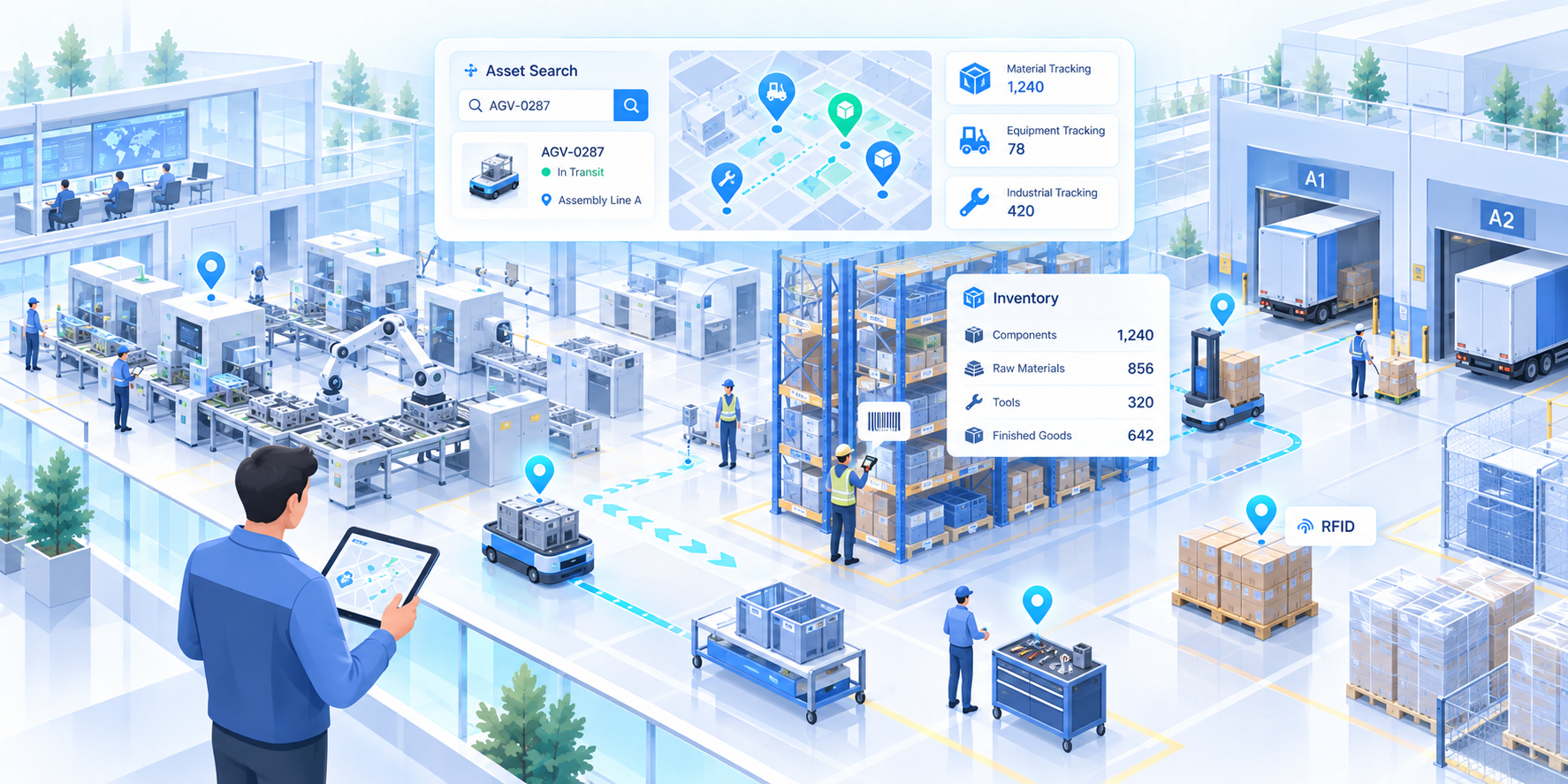
Use industrial tracking to locate materials, vehicles, tools, and other tagged resources. Search by object ID to view location and movement history.
Material tracking can be linked with RFID, barcode, MES, WMS, or production records to support circulation visibility and process traceability. Equipment tracking can help teams locate tools or mobile resources used across production and maintenance workflows.
Collision Prevention
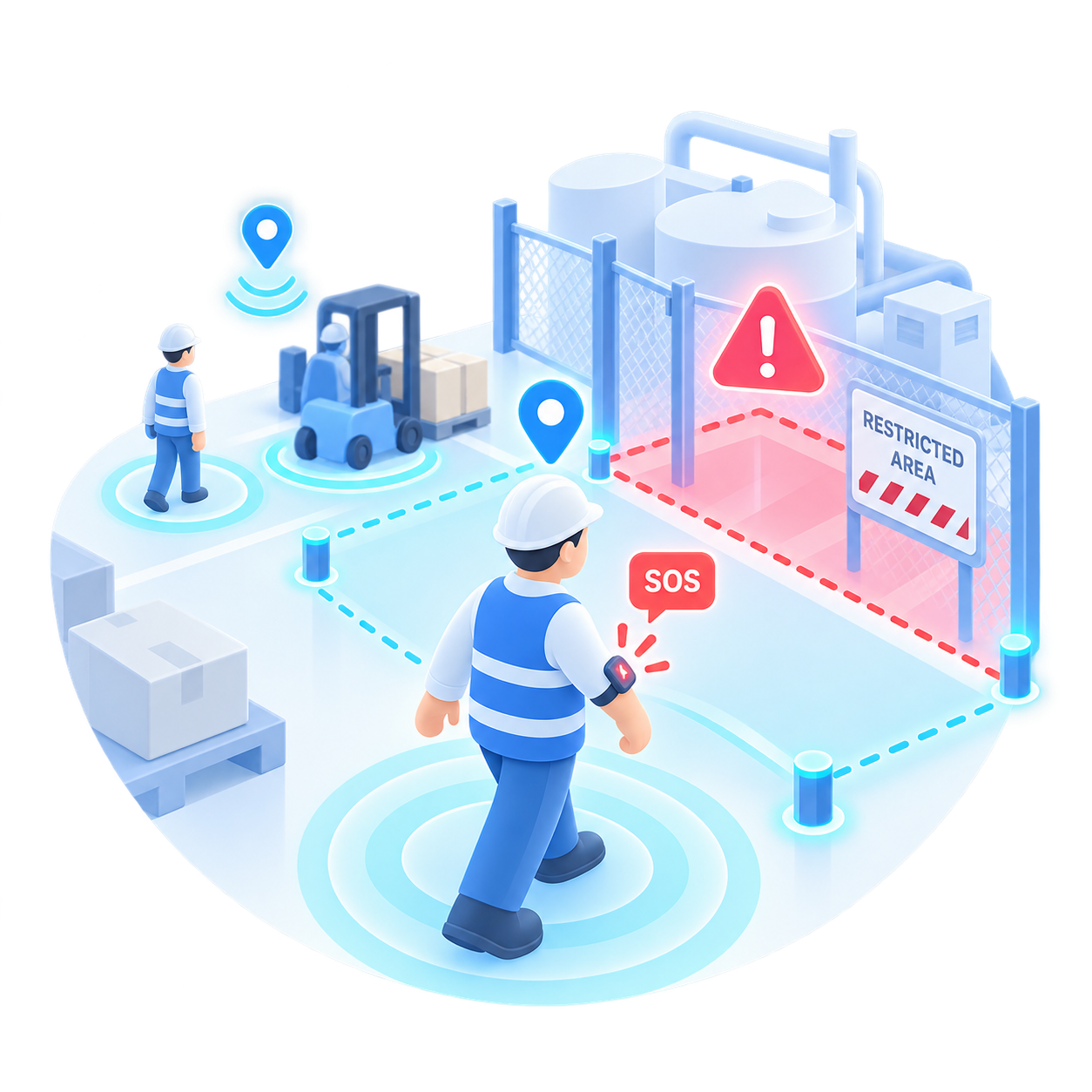
Use UWB ranging and location events to support proximity warnings between personnel and mobile equipment. Where the corresponding safety hardware is deployed, the system can trigger configurable alerts when distance thresholds are reached.
This safety function can be used in mixed pedestrian and vehicle areas without changing the core production workflow.
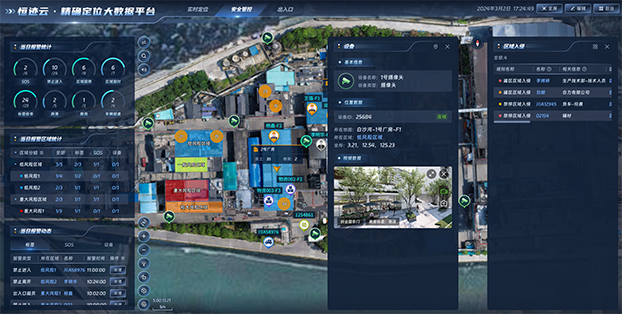
Visual-Verified Monitoring![Personnel tracking system supporting UWB proximity warnings, forklift collision prevention, safety distance alerts, SOS functions, and emergency response in industrial environments]()

Connect supported camera systems with RTLS location data. Operators can select a person or tracked object on the map and access corresponding video information where camera integration is configured.
Combining RTLS technology with video context can support incident review, security management, and operational verification.
Geofencing with Alerts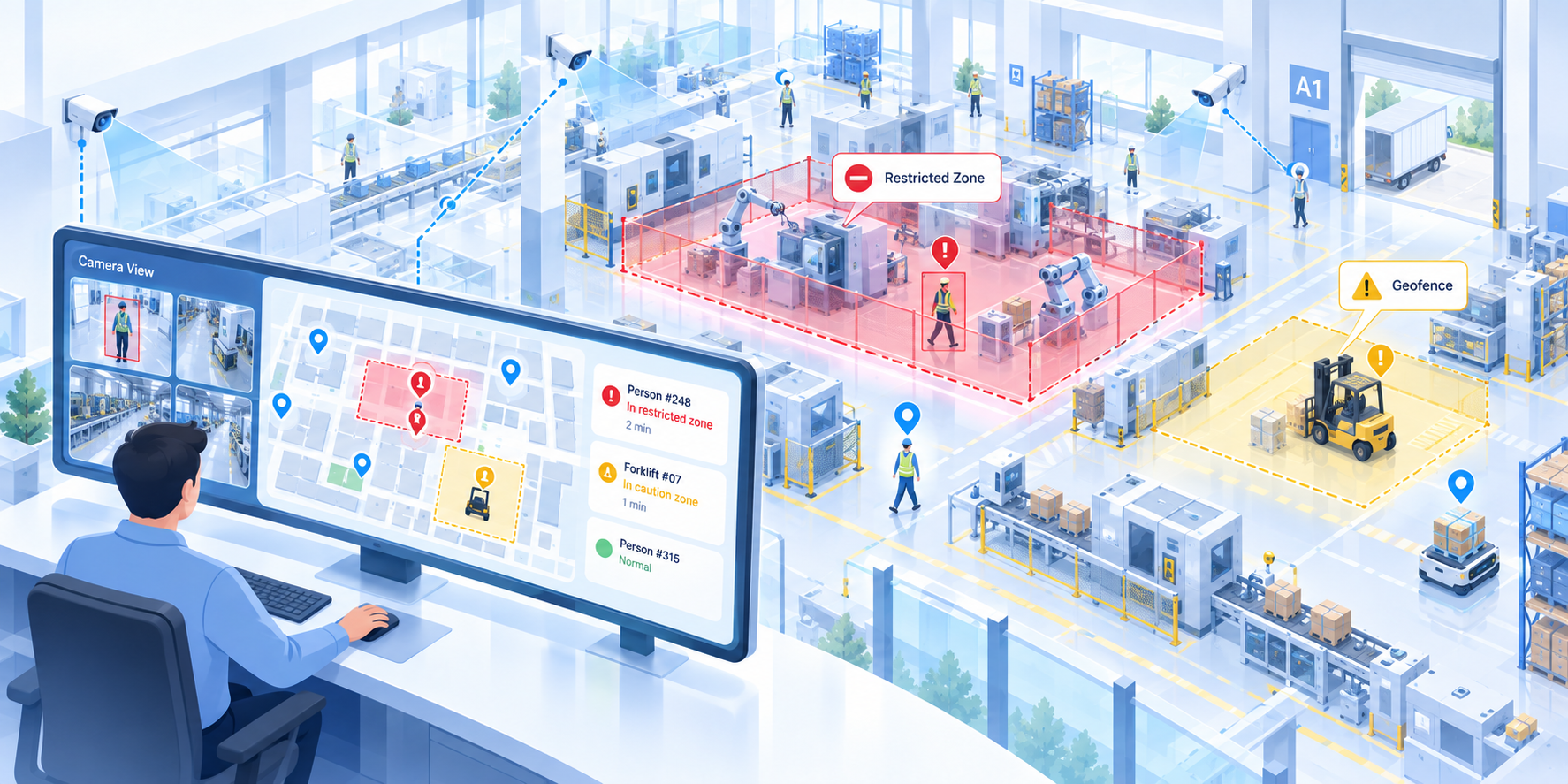
Define virtual zones for hazardous areas, restricted spaces, production stages, or material storage locations. The system can generate alerts when tracked personnel or resources enter, leave, or remain in a configured area according to defined rules.
Geofencing can support personnel tracking, material tracking, and industrial safety applications across factory environments.
Emergency Protocols
Supported positioning tags can provide SOS functions for emergency calls. The personnel tracking system displays the location associated with the alert to support faster response and coordination.
Automated Stockkeeping![Industrial tracking analytics showing heatmaps, dwell time, repeated movement, zone utilization, workforce behavior, and resource optimization in a digital factory]()

Combine location data with RFID or barcode identification to monitor material movement and support inventory statistics. Material tracking records can help teams review where carts, carriers, or production materials are located and how they move between process areas.
This function complements, rather than replaces, existing inventory or warehouse management systems.
Warehouse Optimization
Use location and dwell-time data to review storage-zone utilization, resource movement, and retrieval workflows. Industrial tracking data can support better allocation of materials and mobile resources between production and logistics areas.
Behavioral Insights![Production tracking system with timestamped RTLS logs, movement history, process review, compliance reports, incident investigation, and digital factory integration]()

Analyze workforce location records to identify prolonged inactivity, unusual dwell time, unauthorized presence, or repeated movement patterns according to site policies.
Audit Trails
Export timestamped RTLS logs for process review, compliance support, incident investigation, and operational analysis. Location history can also provide supporting data for a production tracking system or digital factory platform.
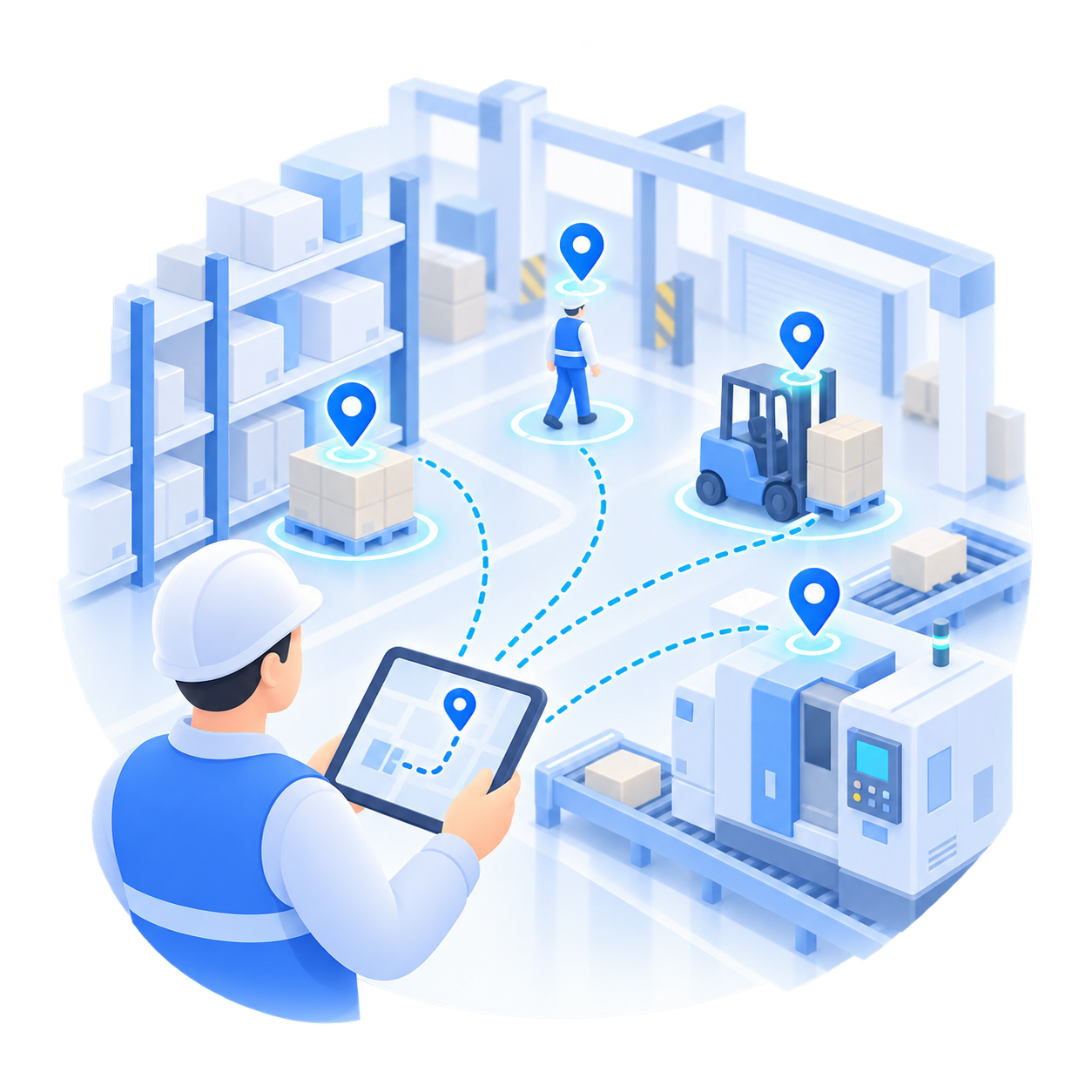
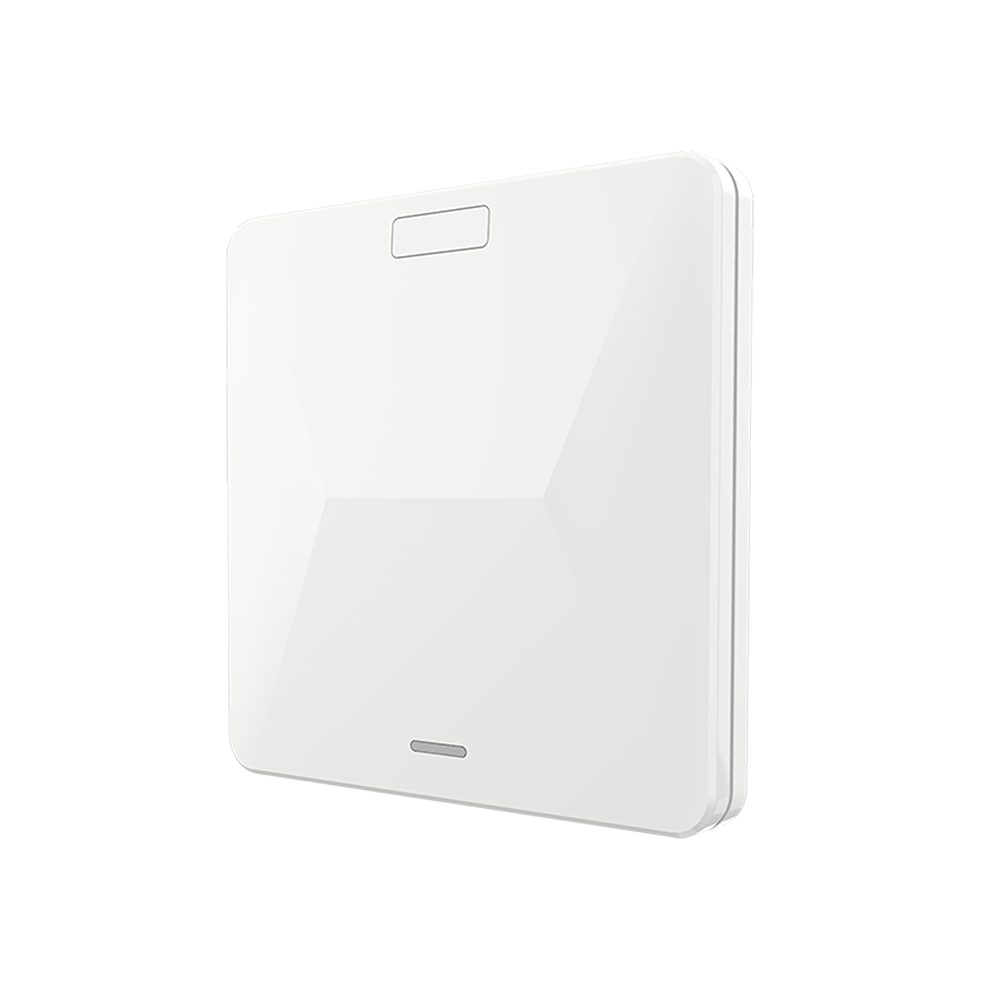
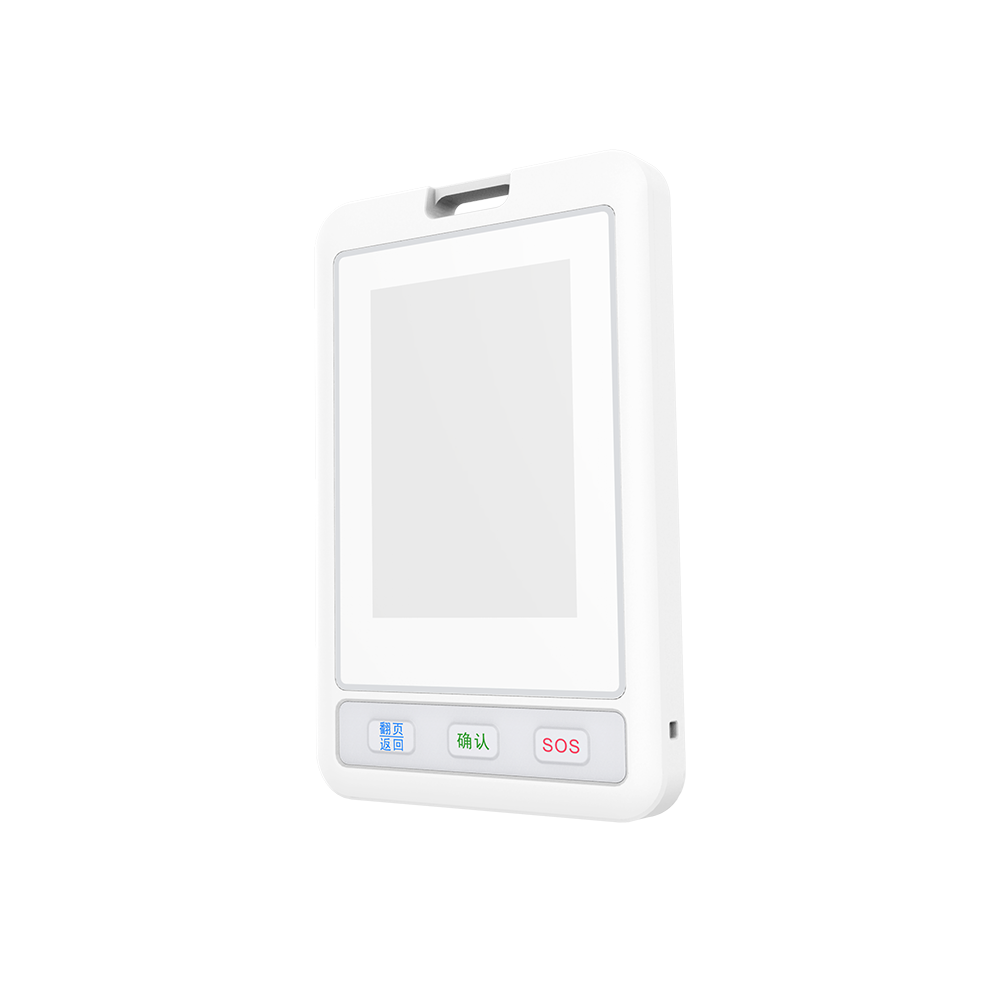
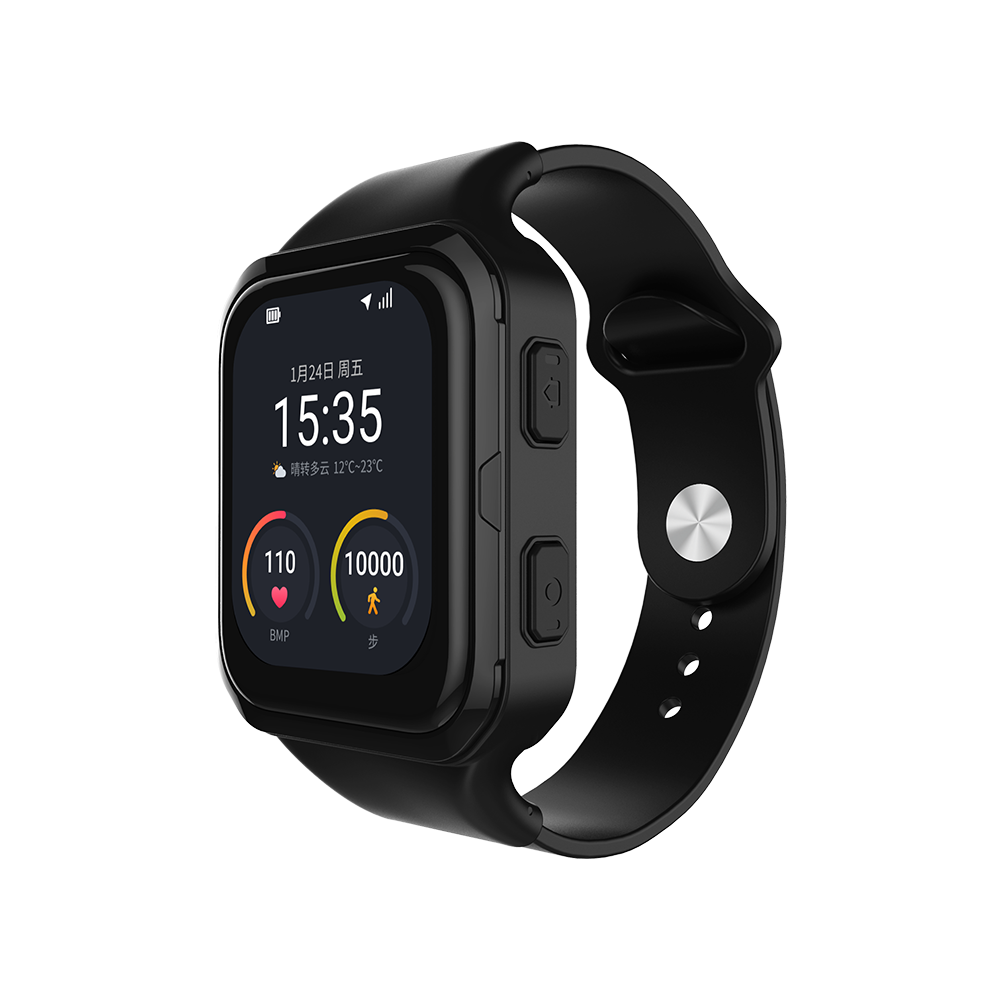
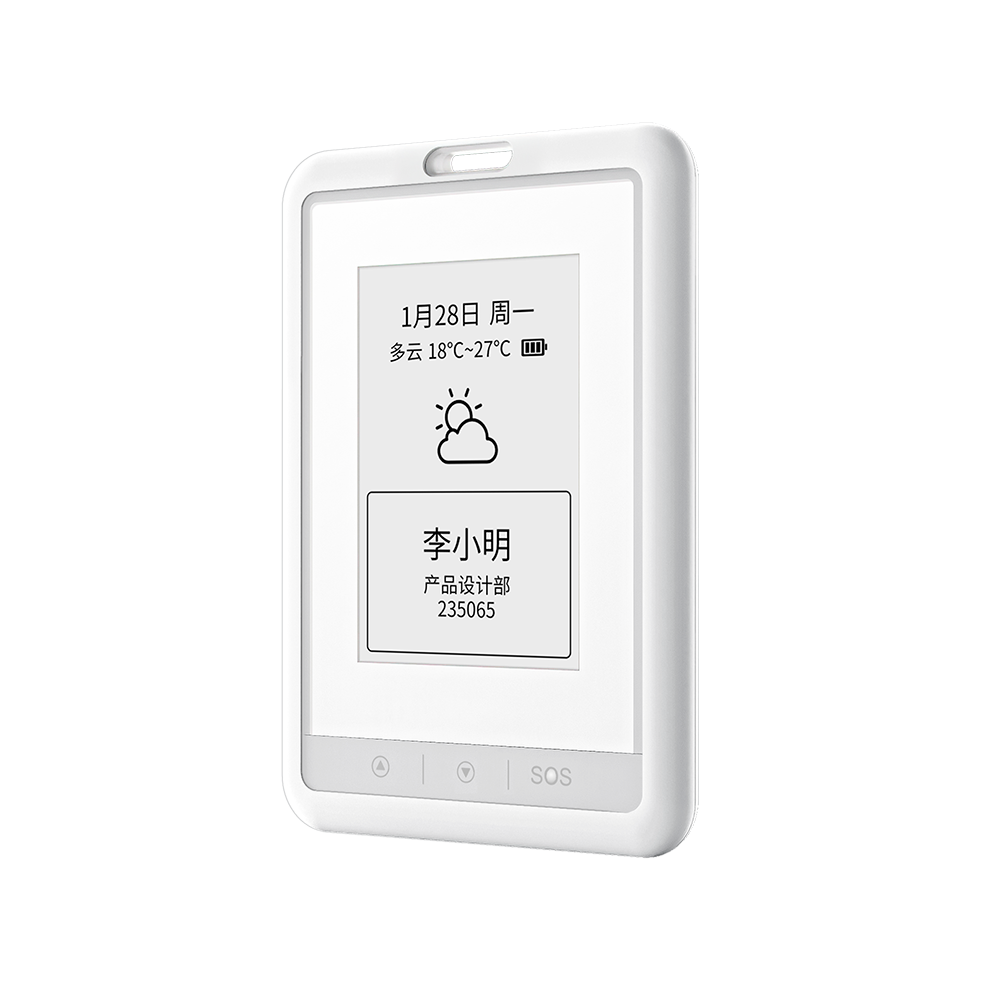
-
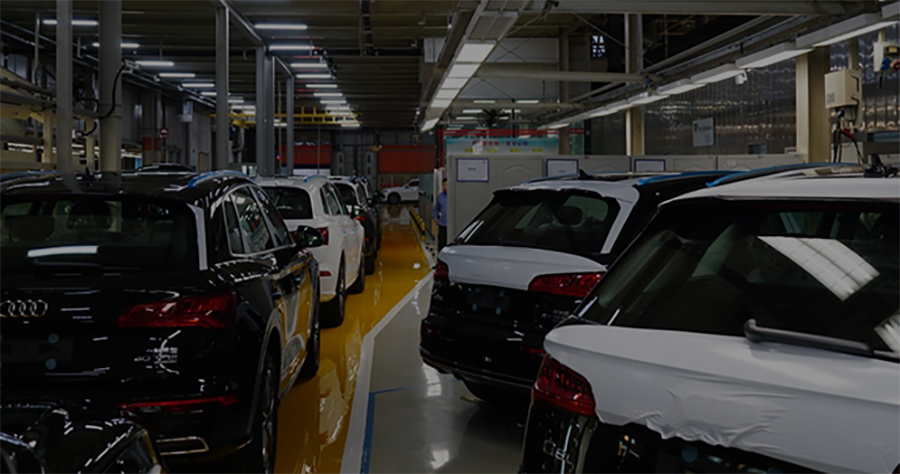 AutomotiveManufacturingUse UWB location data to track vehicles in repair and post-production areas. Location history can support faster vehicle retrieval and workshop coordination.
-
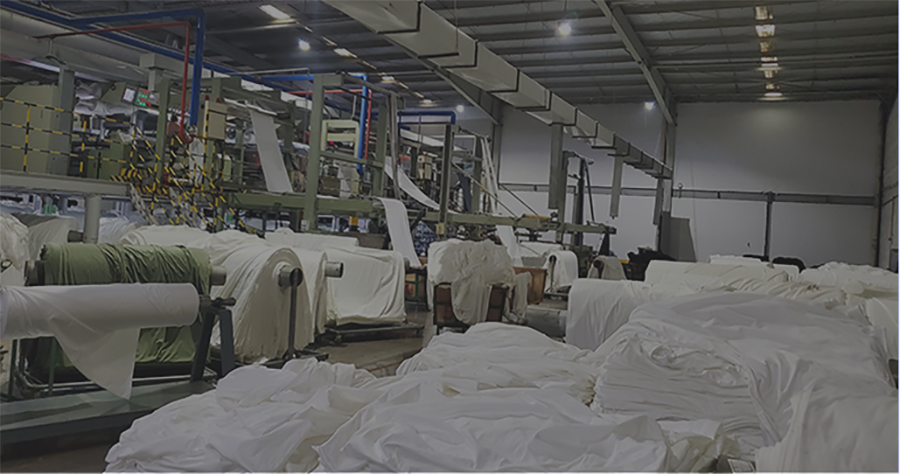 TextileDyeingA printing and dyeing project uses UWB positioning for material trolleys, work-order association, geofencing, trajectory playback, and production scheduling. The documented case reports that trolley search time was reduced from nearly one hour to several minutes.
-
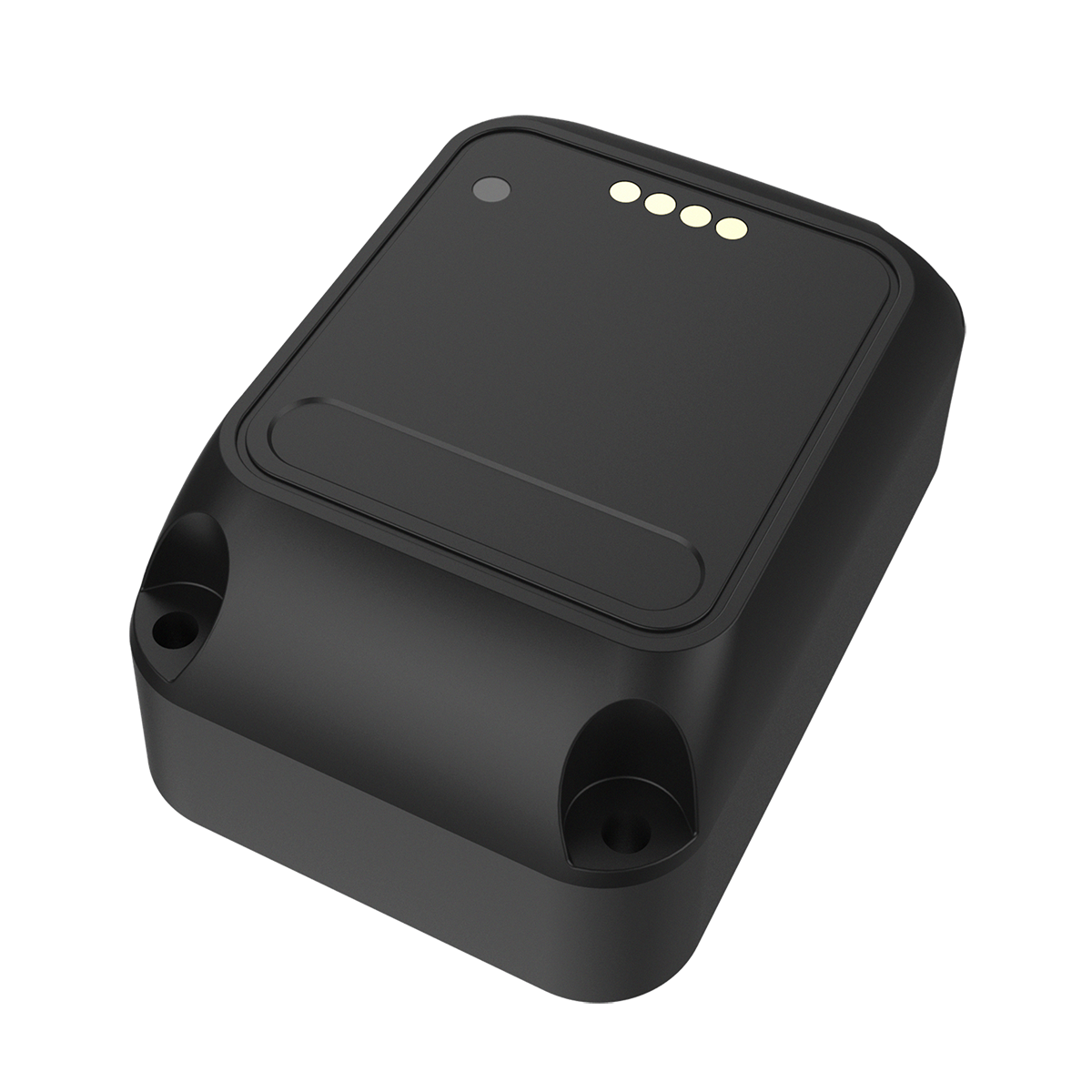
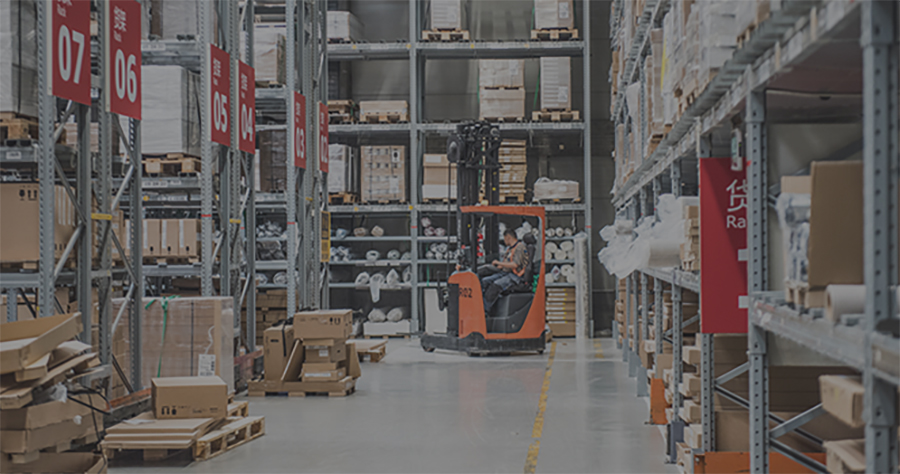 WarehouseLogisticsA Thailand e-commerce warehouse deployed 50+ UWB anti-collision ranging stations and 200+ personnel tags. The system uses up-to-10-cm UWB ranging for person-to-forklift and forklift-to-forklift proximity warnings.
-
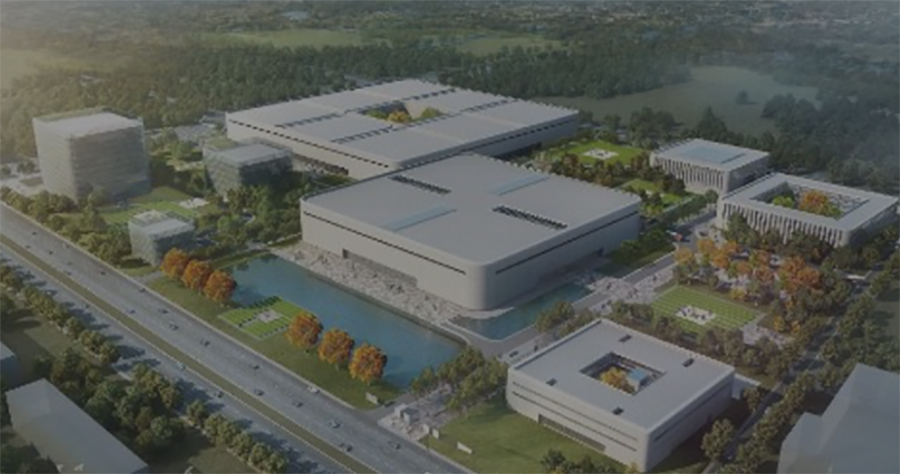 ElectronicsManufacturingA semiconductor display project deployed 500 UWB base stations and 200 personnel tags for maintenance-personnel positioning. The documented project reports 30-cm-level personnel positioning and location-based maintenance dispatching.