
UWB Indoor Navigation System for Museums

INDUSTRY CHALLENGES
APPLICATION OVERVIEW
SCENARIO COMPARISON
CORE FEATURES
KEY ADVANTAGES
COMPATIBLE HARDWARE



APPLICATION OVERVIEW

SCENARIO Comparison
Typical Scenario
Business Requirements
Bluetooth RSSI Positioning

Bluetooth AOA Positioning

UWB Smartphone Downlink Positioning (Recommended)

 Key Points
- High visitor density requires stable positioning for multiple users to ensure smooth navigation and a seamless visiting experience.
Key Points
- Signal interference increases in crowded environments, causing positioning drift and unreliable navigation.
Key Points
- Limited concurrency may cause delays and system pressure when many visitors are positioned simultaneously.
Key Points
- ✓ Base stations transmit signals while smartphones calculate positions locally, supporting large numbers of users without server-side processing limitations.
Key Points
- Requires accurate visitor location recognition to trigger the correct content when visitors approach specific exhibits.
Key Points
- Provides only approximate location information and cannot distinguish between nearby exhibits, resulting in inaccurate content triggering.
Key Points
- Metal displays, glass structures, and environmental changes may affect accuracy, requiring repeated calibration.
Key Points
- ✓ Centimeter-level positioning accurately identifies visitor-exhibit distance, enabling precise automatic guidance and preventing incorrect content playback.
Key Points
- Multi-floor exhibition spaces require continuous navigation across galleries, elevators, stairways, and parking areas.
Key Points
- Floor-level recognition is unreliable around stairs and elevators, requiring users to relocate manually.
Key Points
- Cross-floor positioning is affected by installation conditions, signal obstruction, and network environments, causing navigation interruptions.
Key Points
- ✓ Smartphones calculate positions locally without network dependency, enabling continuous navigation from parking areas to exhibition halls across multiple floors.
Key Points
- Museums require long-term stable operation with easy device management and minimal maintenance disruption.
Key Points
- Device status visibility is limited, requiring manual inspection and frequent battery maintenance.
Key Points
- Base station angles, coordinates, and environmental changes may affect accuracy, requiring repeated calibration.
Key Points
- ✓ Supports online base station status monitoring and remote troubleshooting, reducing manual maintenance and ensuring long-term stable operation.
CORE FEATURES
 Real-Time Indoor Location & Guided Navigation
Authorized Visitor Analytics & Reports
Real-Time Indoor Location & Guided Navigation![UWB indoor positioning providing real-time visitor location, floor recognition, and guided navigation inside a museum]()

Continuous Multi-Floor Navigation & Route Correction
![UWB indoor positioning infrastructure monitoring anchors, synchronization, network status, API integration, and museum location services]()

Exhibit-Level Automatic Guide Triggering
![Museum audio guide system automatically triggering exhibit content using precise indoor positioning and point-of-interest arrival detection]()

Authorized Visitor Analytics & Reports
![Indoor positioning system providing visitor location data for museum emergency response, risk zones, and evacuation guidance workflows]()

Emergency Location Support
![Indoor navigation system supporting continuous multi-floor museum wayfinding, route correction, elevators, stairs, and gallery navigation]()

Infrastructure Monitoring & Integration





COMPATIBLE HARDWARE
Infrastructure Hardware
UWB Anchor Devices
UWB anchors form the fixed positioning infrastructure for the indoor navigation system and UWB indoor positioning coverage.
-
Eforthink UWB Indoor Wall-Mounted Positioning Base Station
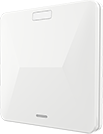
Dimensions: 86.6x86.6 x36.0 mm
Power Interface: PoE
Antenna Type: Built-in onboard antenna
Product Weight: ≤120 g
Rated SupplyVoltage: 48 V Standard PoE (802.3at)
Network Interface: RJ45 8-pin
Wired Data Interface: 10/100 Mbps adaptive LAN
Positioning Wireless Standard: IEEE 802.15.4-2015 UWB
-
Eforthink UWB Indoor Ceiling-Mounted Positioning Base Station
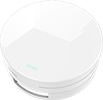
Dimensions: 96×96×40.5mm
Weight: 130 g
AntennaType: Built-in PCB antenna
Rated Power: 2.4W
Rated Supply Voltage: 48 V Standard PoE(IEEE 802.3at)
Network Interface: RJ45 8-pin
Wired Data Interface: 10/100 Mbps Adaptive LAN
Positioning Wireless Standard: IEEE 802.15.4-2015 UWB
Ecosystem Devices
UWB-Enabled Smartphones
Compatible UWB-enabled smartphones act as positioning terminals for the indoor navigation system.
iOS Ecosystem
Coverage includes mainstream iPhone models: iPhone 12/ 13 / 14/ 15 / 16 / 17series
Strong ecosystem advantage with large installed base and mature UWB capability
Consistent user experience and ideal as primary coverage devices
Note: SE series and certain variants without UWB are excluded; availability depends on regional specifications
Android Ecosystem
Representative models: Xiaomi MIX 4, Xiaomi 17 Ultra, Xiaomi 17 Pro Max, Xiaomi 15S Pro, Samsung Galaxy S24 Ultra / S24+ / Z Fold5 / Z Fold6, etc.
Eligibility requirements: Built-in UWB chip + OS-level UWB support + project compatibility validation
Application characteristics: Highly fragmented device landscape with varying capability levels
Note: SE series and certain variants without UWB are excluded; availability depends on regional specifications