
EforLink UWB Seamless Access Solution
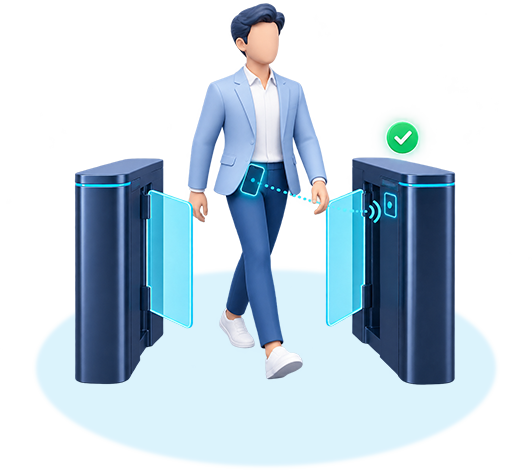
Application Overview
Technical Comparison
CORE FEATURES
KEY ADVANTAGES
COMPATIBLE HARDWARE
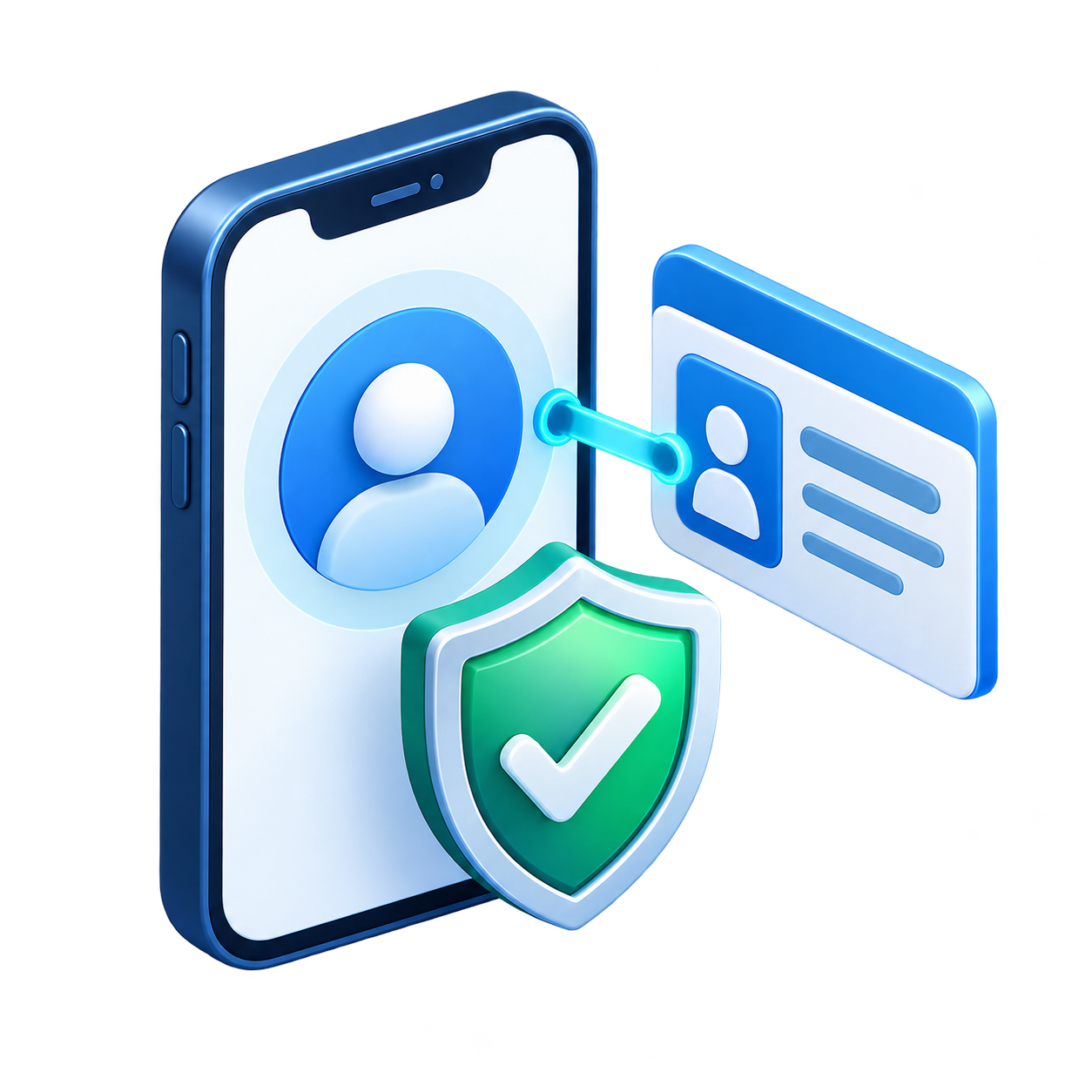
Identity Binding & Authorization
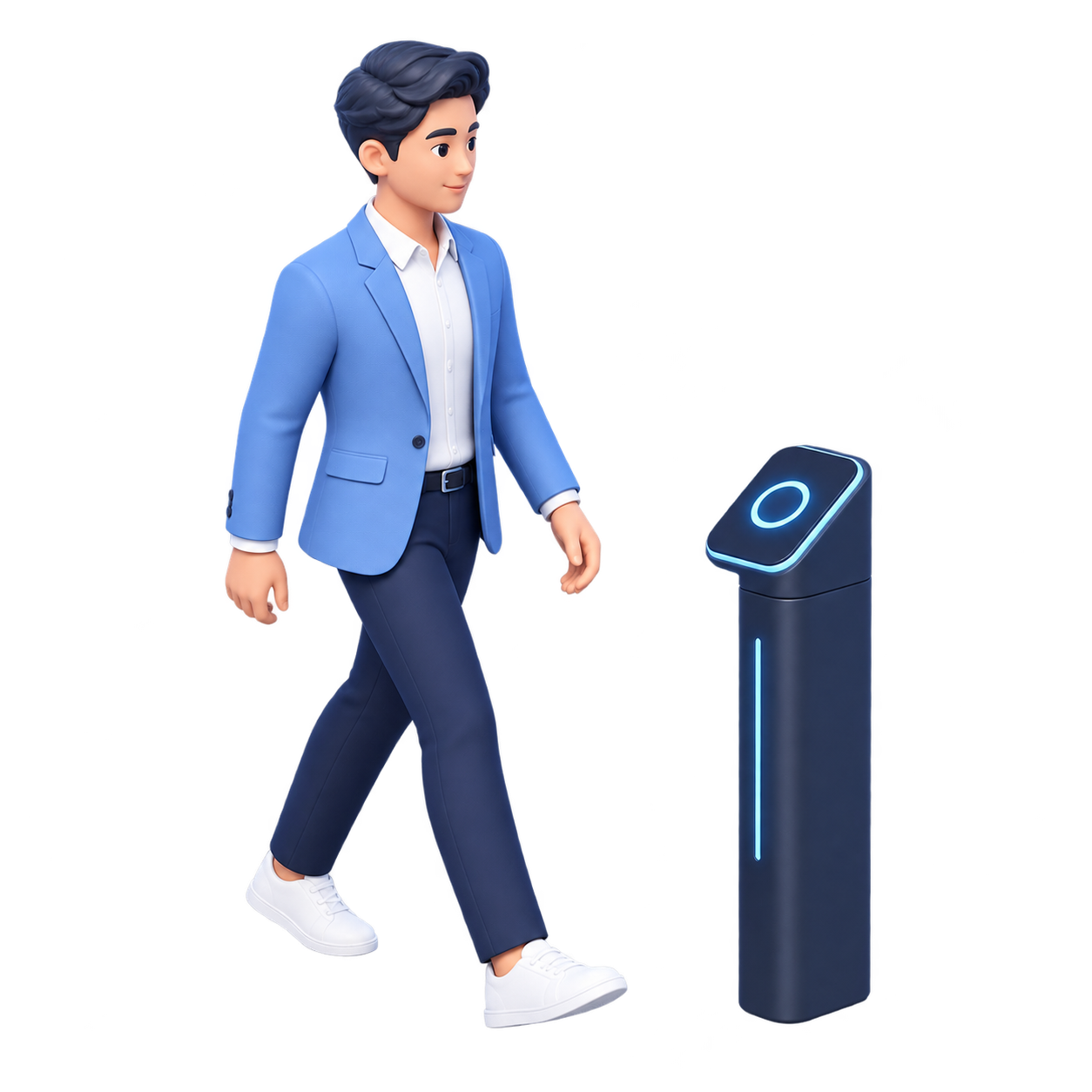
User Approaches
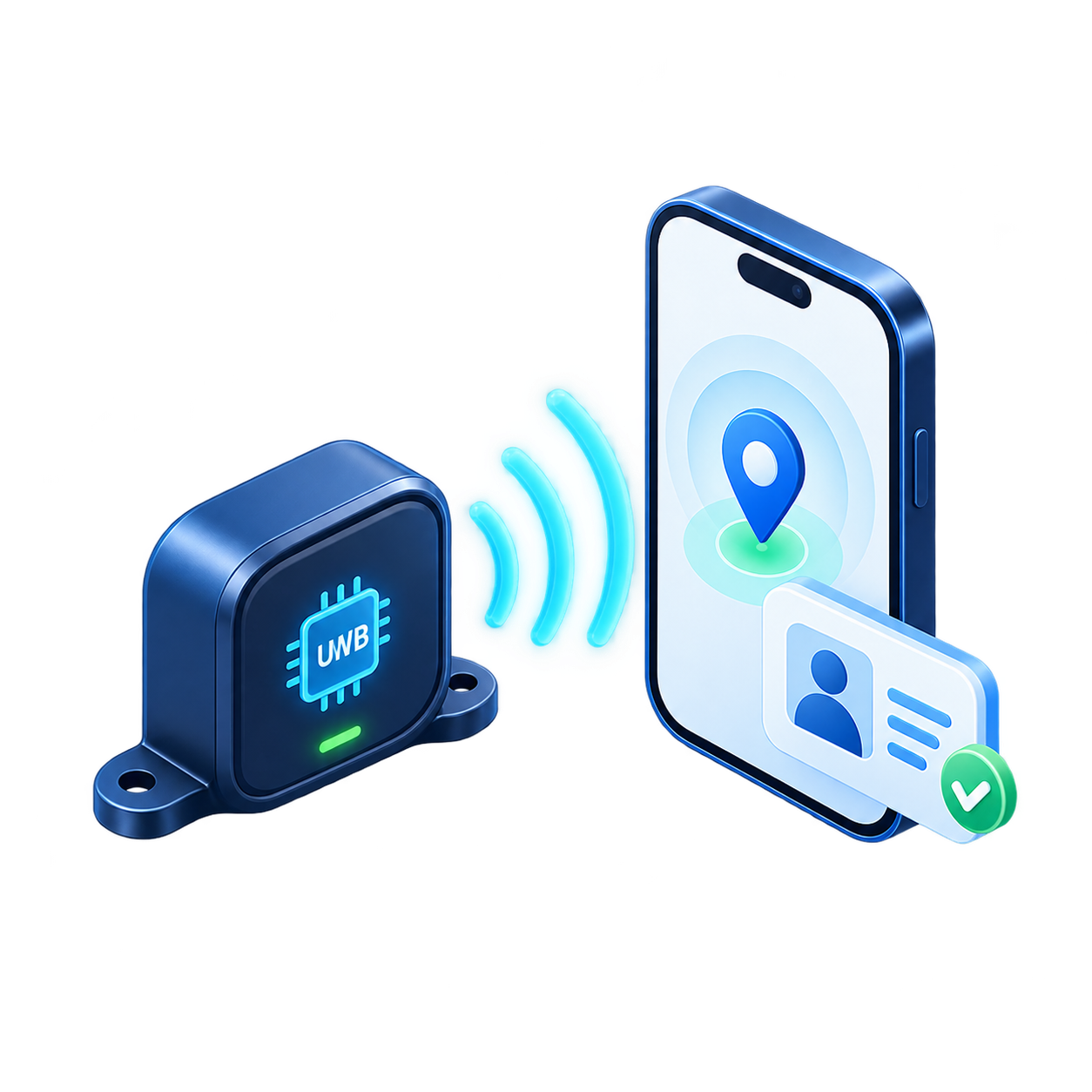
UWB Ranging & Identity Recognition

Access Control System Authorization
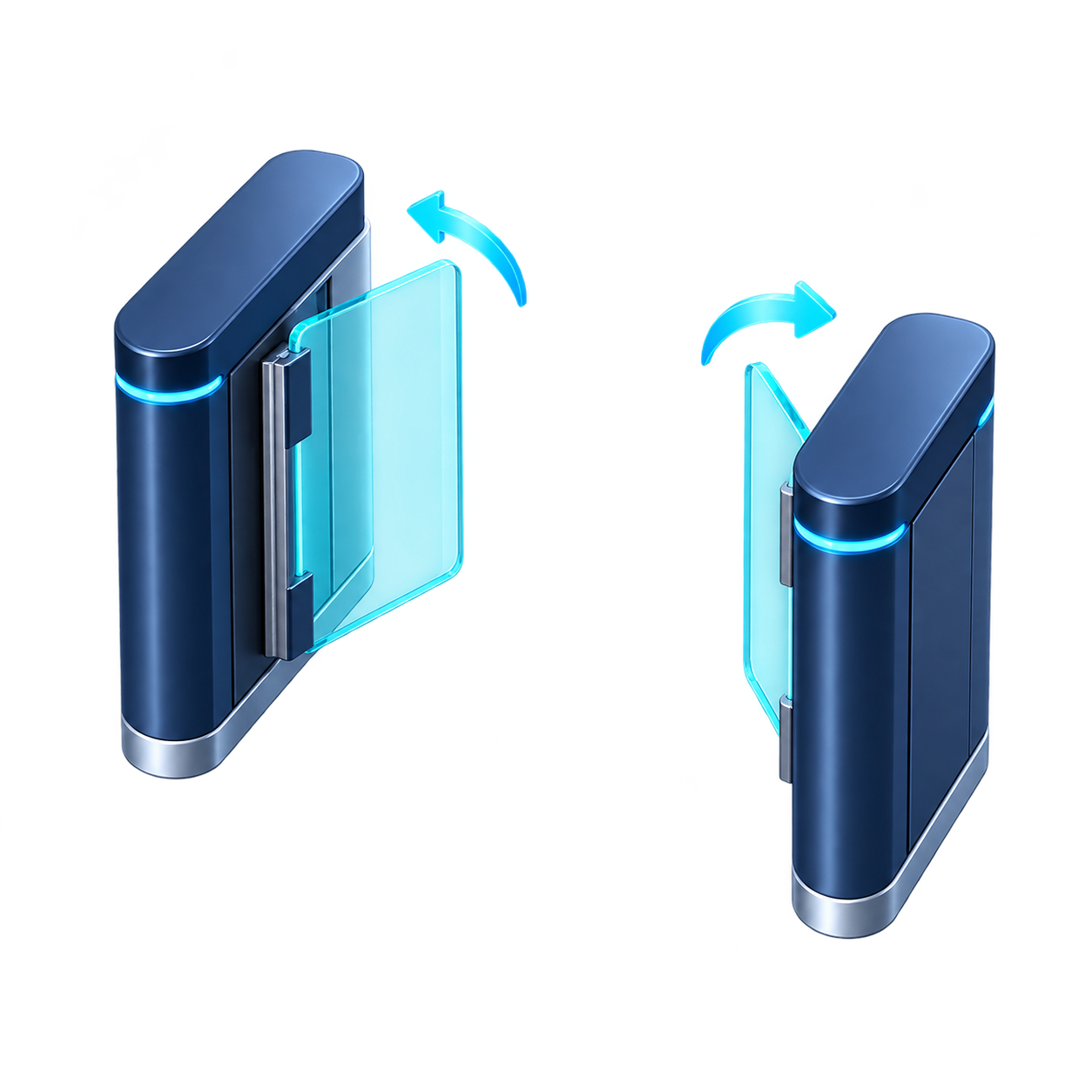
Door or Turnstile Opens
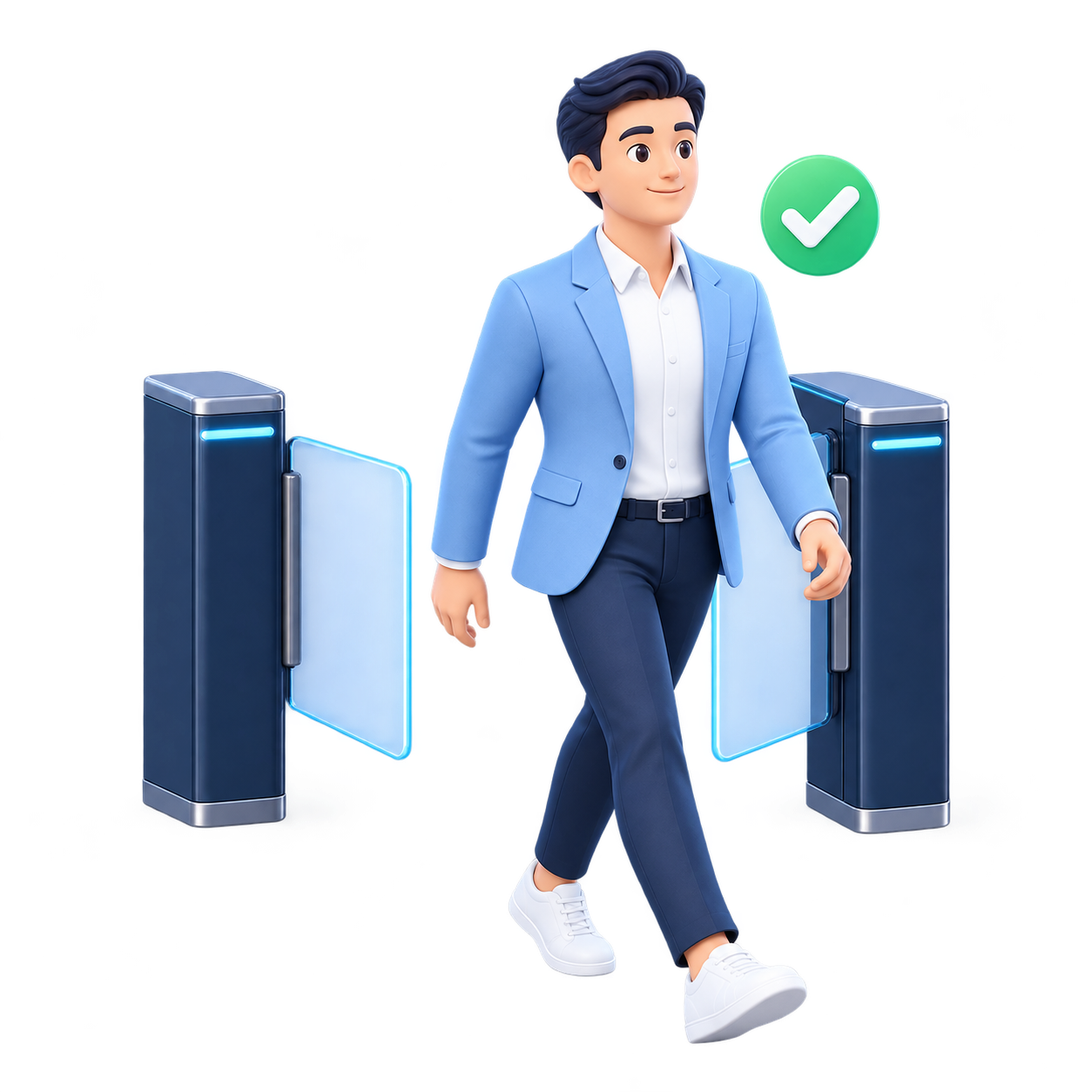
User Passes Through
Technical Comparison
Technical Comparison
Comparison
Facial Recognition
Access Card

Fingerprint

UWB Seamless Access

 Key Points
- Facial image recognition
Key Points
- Physical card reading
Key Points
- Fingerprint recognition
Key Points
- ✓ Centimeter-level UWB ranging and automatic identity recognition
Key Points
- Typically 1–2 seconds per person
Key Points
- Typically around 1 second per person
Key Points
- Typically 1–2 seconds per person
Key Points
- ✓ Millisecond-level recognition while the user is moving
Key Points
- Typically 3–5 faces in the reference comparison
Key Points
- One card read at a time
Key Points
- One fingerprint read at a time
Key Points
- ✓ Up to 20 tags concurrently; capacity depends on configuration
Key Points
- Horizontal range: 0.1–1.2 m
Key Points
- Within 1 cm of the card reader
Key Points
- Direct contact with the fingerprint reader
Key Points
- ✓ Omnidirectional sensing; configurable recognition distance within the specified 0–20 m range
Key Points
- Requires facial biometric data collection
Key Points
- Records card ID only
Key Points
- Requires fingerprint biometric data collection
Key Points
- ✓ No facial or fingerprint biometric information is required
Key Points
- May be affected by face coverings, viewing angle, and lighting
Key Points
- Depends on card and reader condition
Key Points
- May be affected by wet, peeling, or dirty fingers
Key Points
- ✓ Centimeter-level UWB time-of-flight ranging supports precise proximity detection
Key Points
- Spoofing resistance depends on liveness detection and implementation
Key Points
- Cloning resistance depends on card technology and implementation
Key Points
- Spoofing resistance depends on sensor and liveness detection
Key Points
- ✓ Scrambled Timestamp Sequence (STS) supports secure ranging and helps resist ranging manipulation
Key Points
- Sensitive to lighting conditions
Key Points
- Stable operation
Key Points
- Affected by finger condition
Key Points
- ✓ Ranging does not rely on lighting or camera viewing angle; performance depends on installation and operating conditions
User Experience Comparison
Comparison
Facial Recognition
Access Card
Fingerprint
UWB Seamless Access
Key Points- Stop → adjust posture → facial recognition → wait for result → gate opens → resume walking
Key Points- Stop → take out card → present card → wait for verification → gate opens → pass
Key Points- Stop → press finger → wait for verification → gate opens → pass
Key Points- ✓ No stopping and no additional action required; pass through directly
Key Points- Stop and align with the camera
Key Points- Take out and present a card
Key Points- Place a finger on the reader
Key Points- ✓ No manual verification action during passage after setup and authorization
Key Points- Requires cooperation with the recognition posture
Key Points- Requires carrying a physical card
Key Points- Requires active operation and may be affected by hand condition
Key Points- ✓ Seamless access without changing the user's normal walking behavior
Key Points- Less suitable for some users who cannot easily cooperate with facial recognition
Key Points- Less convenient for some users with hand impairments or wheelchair users
Key Points- Less suitable for users with hand impairments or worn fingerprints
Key Points- ✓ A compatible smartphone or supported UWB tag provides the credential; recognition requires no additional gesture
*The comparison describes typical access methods. Performance varies by device, configuration, and operating conditions. Recognition speed refers to the recognition stage, not the total time required for authorization, gate opening, or passage.
CORE FEATURES
 Centimeter-Level Spatial Awareness
Automatic Identity Recognition
Secure Identity & Privacy Protection
Stable & Reliable Operation
Flexible Integration & Retrofit Deployment
Centimeter-Level Spatial Awareness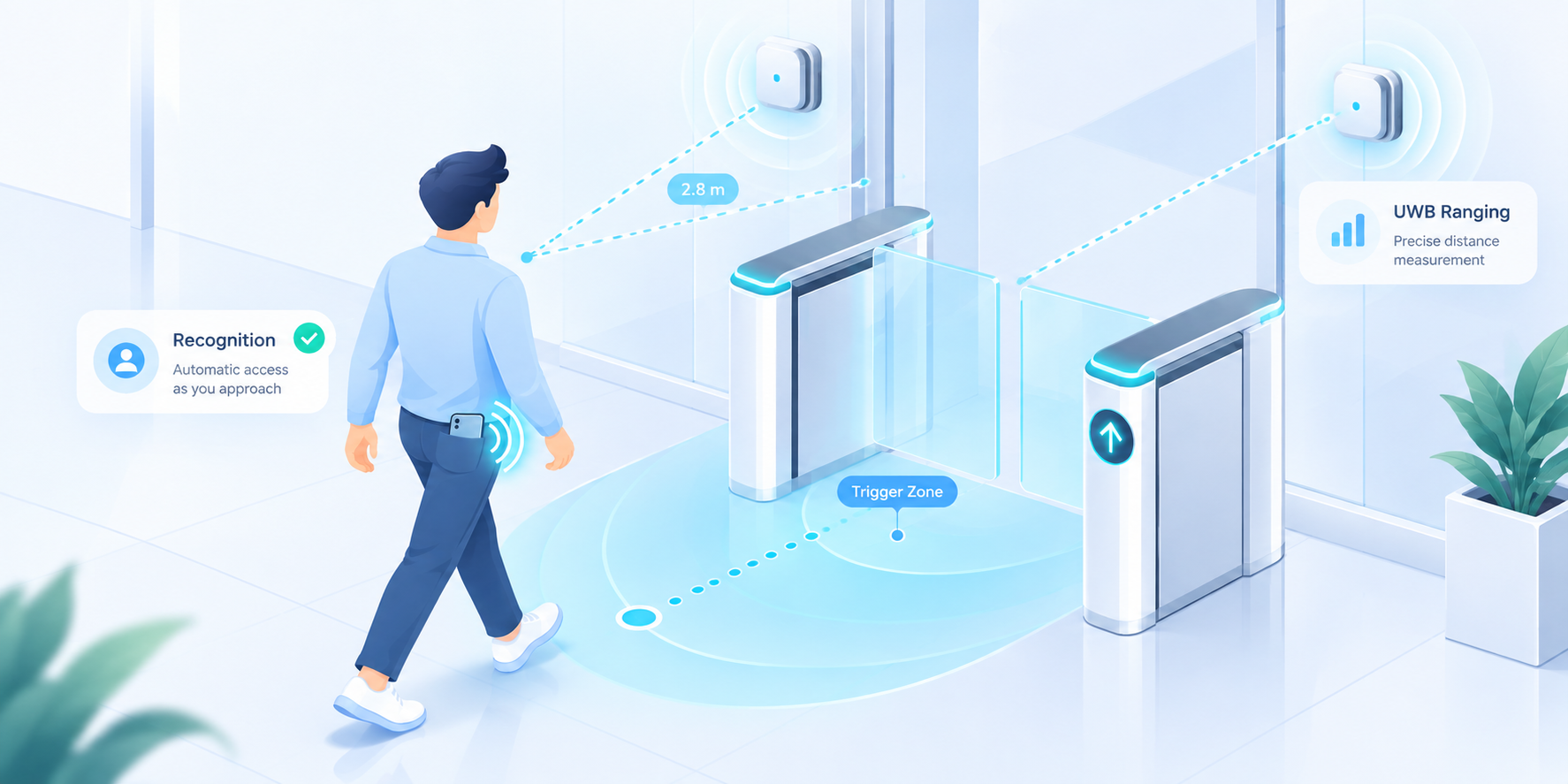
Automatic Identity Recognition
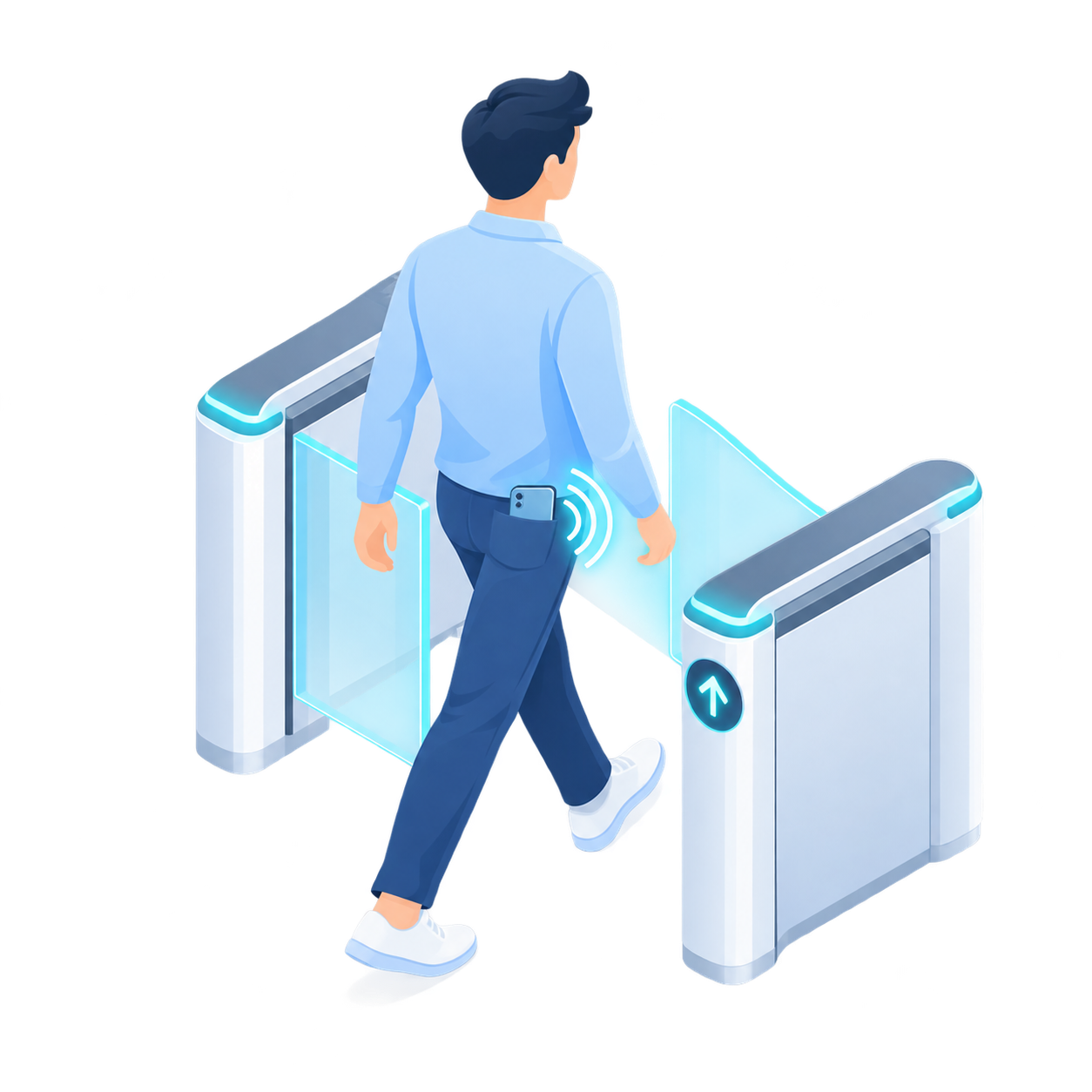
![UWB device identity binding connecting authorized smartphone credentials with seamless access control workflows]()

Secure Identity & Privacy Protection
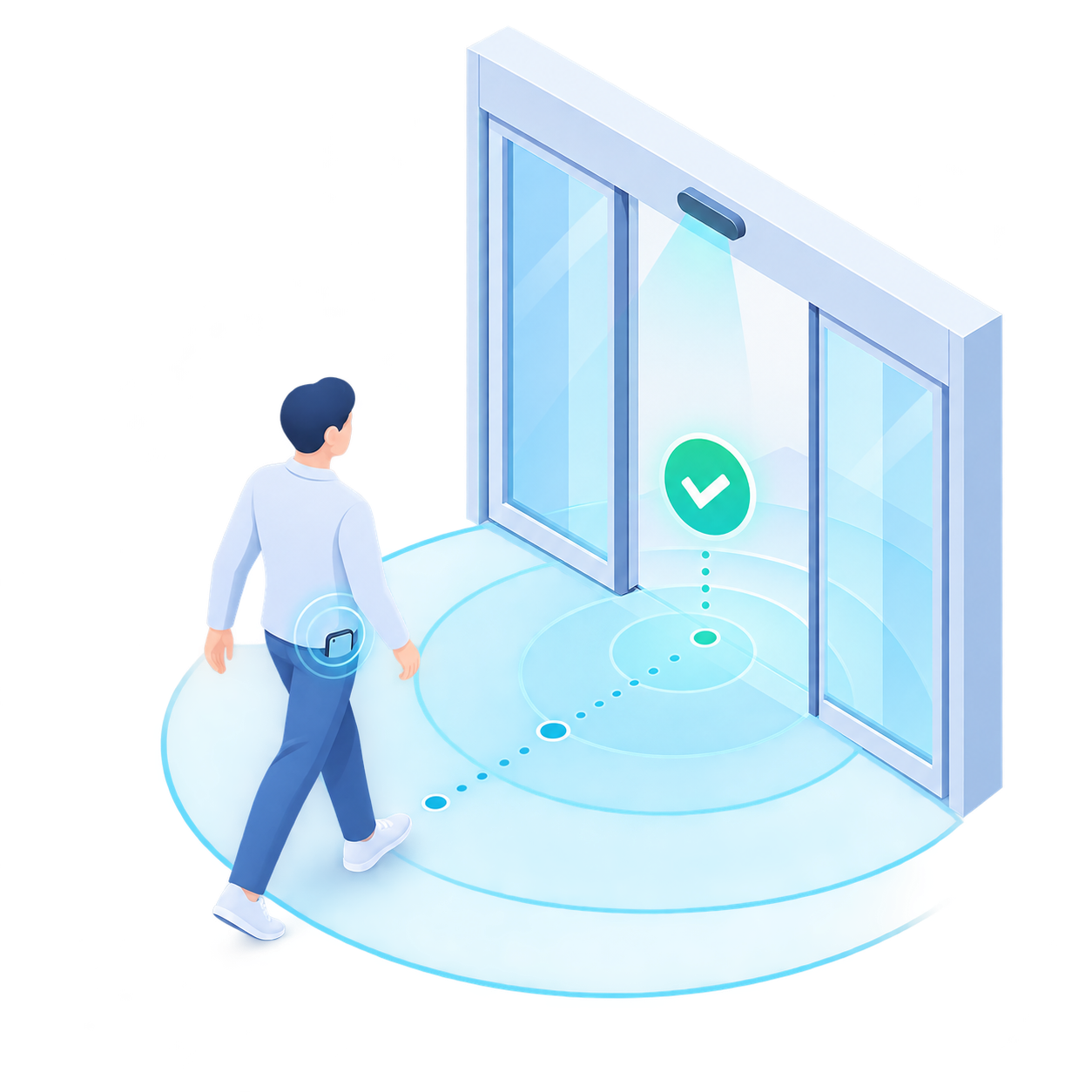
![Configurable UWB system access trigger combining distance, identity, and permission verification for automatic entry]()

Stable & Reliable Operation
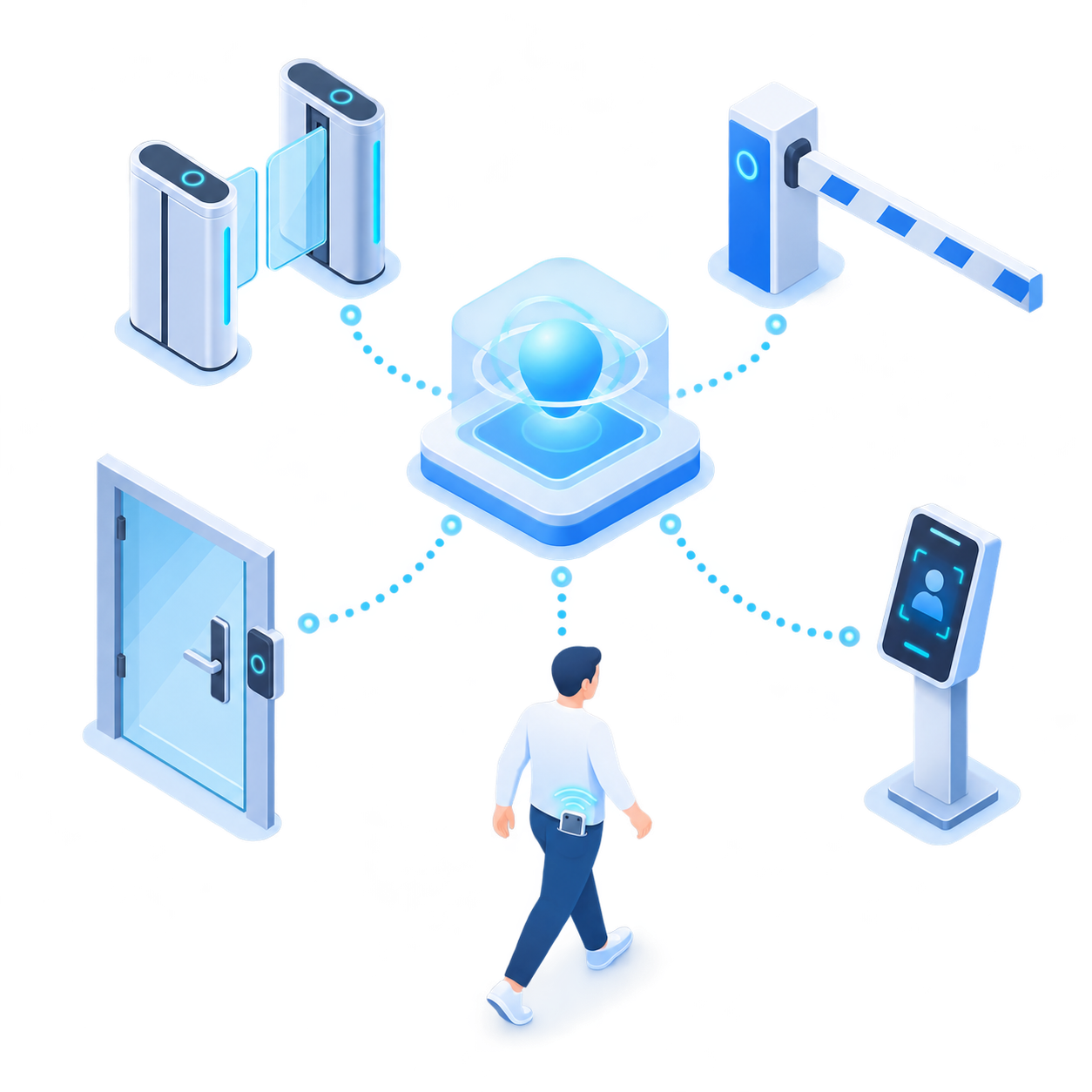
![UWB applications integrating smartphones, SDK, access controllers, turnstiles, smart locks, and third-party entrance equipment]()

Flexible Integration & Retrofit Deployment
![UWB system supporting local credential verification and offline access through configured controller logic without continuous cloud communication]()

COMPATIBLE HARDWARE
Ecosystem Support
-
Apple Ecosystem
Supported Models
Selected UWB-equipped models in the iPhone 12–17 series
Ecosystem Advantages
• Large installed user base
• Mature UWB capabilities
• Consistent interaction experience
Support Notes
iPhone SE models and other models without UWB hardware are not supported. Compatibility depends on the specific phone model, iOS version, app, and deployed accessory configuration. Complete the required permissions and pairing before use.
-
Android Ecosystem
Representative Smartphones
• Selected UWB-equipped Xiaomi models
• Selected UWB-equipped Samsung Galaxy models
Ecosystem Trend
UWB availability varies by model. Solution compatibility also depends on the Android version and app integration; a brand name alone does not indicate support.
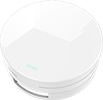
UWB Recognition Module
The UWB Recognition Module is the core hardware component of the Eforthink UWB Seamless Access Solution.
It combines UWB high-precision ranging and identity recognition to detect authorized users within the configured access area and send identity-trigger information to the existing access control system.
With multiple hardware and communication interfaces, the module supports flexible integration with existing access control systems, turnstiles, and other access devices.
Product Specifications
Item |
Specification |
Module Dimensions |
71.5 mm × 73.5 mm × 11 mm |
Power Supply |
DC power supply, 9–24 V wide voltage input |
Wiegand Interface |
Wiegand Input: Data0 / Data1; Wiegand Output: Data0 / Data1 |
Communication Interface |
RS485, RS232 |
Switch Interface |
NO normally open contact / COM common terminal / NC normally closed contact |
Power Indicator |
Stays on after power-up; flashes when the button is pressed |
Signal Indicator – Red |
Red light flashes during ranging |
Signal Indicator – Green |
Green light flashes when recognition is successful |